History
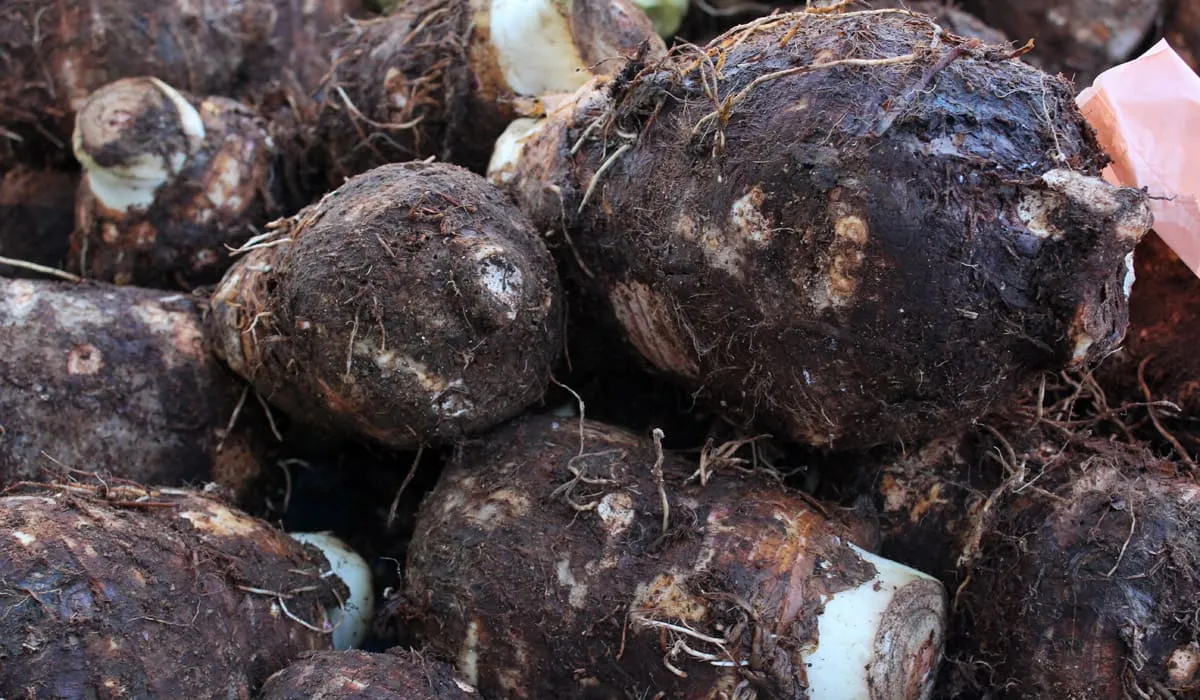
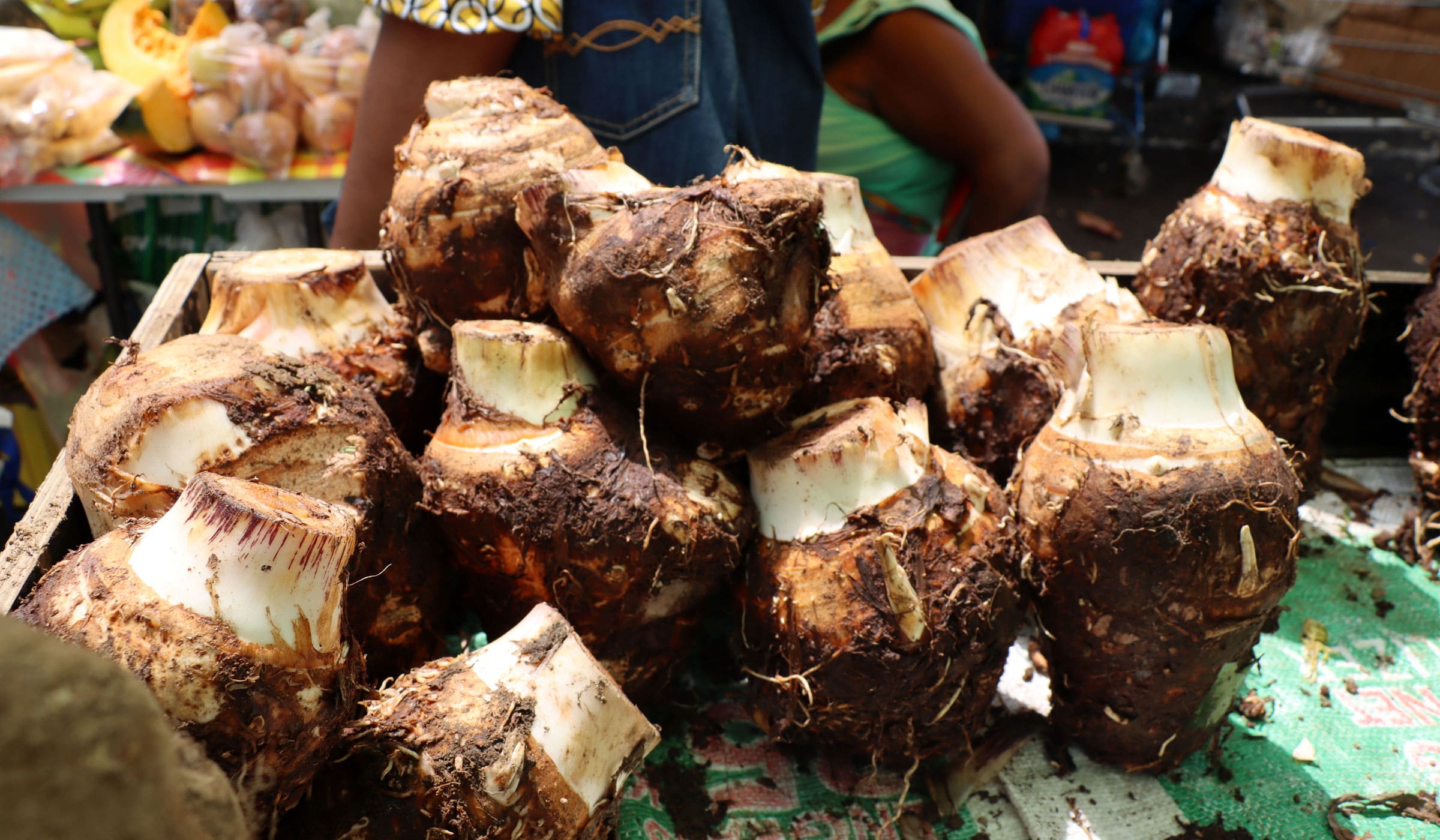
Dasheen or taro, known in Martinique as chou de Chine or dachine, and scientifically as Colocasia esculenta, is a tuber from the Araceae family. It is also called taro, songe, or arouille violette in Réunion and Mauritius, and madère in Guadeloupe.
Despite its Martinican name chou de Chine, taro does not originate from China but from Indonesia and Malaysia. It later spread throughout Central and South Asia and Southeast Asia. By 100 BCE, it was cultivated in China and Egypt, and it reached Africa around 2,000 years ago. It was brought to the Caribbean aboard slave ships from Africa, where it became one of the staple foods grown by enslaved people in their provision gardens. Taro, therefore, likely arrived in Martinique during the colonial period.
Varieties
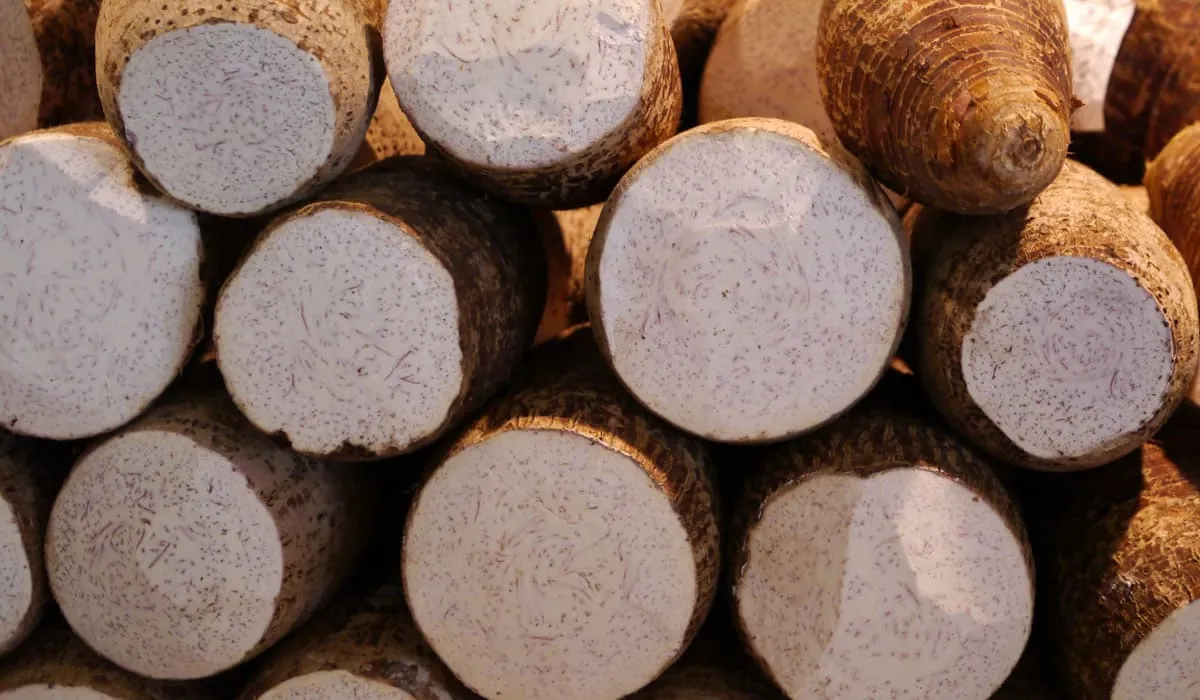
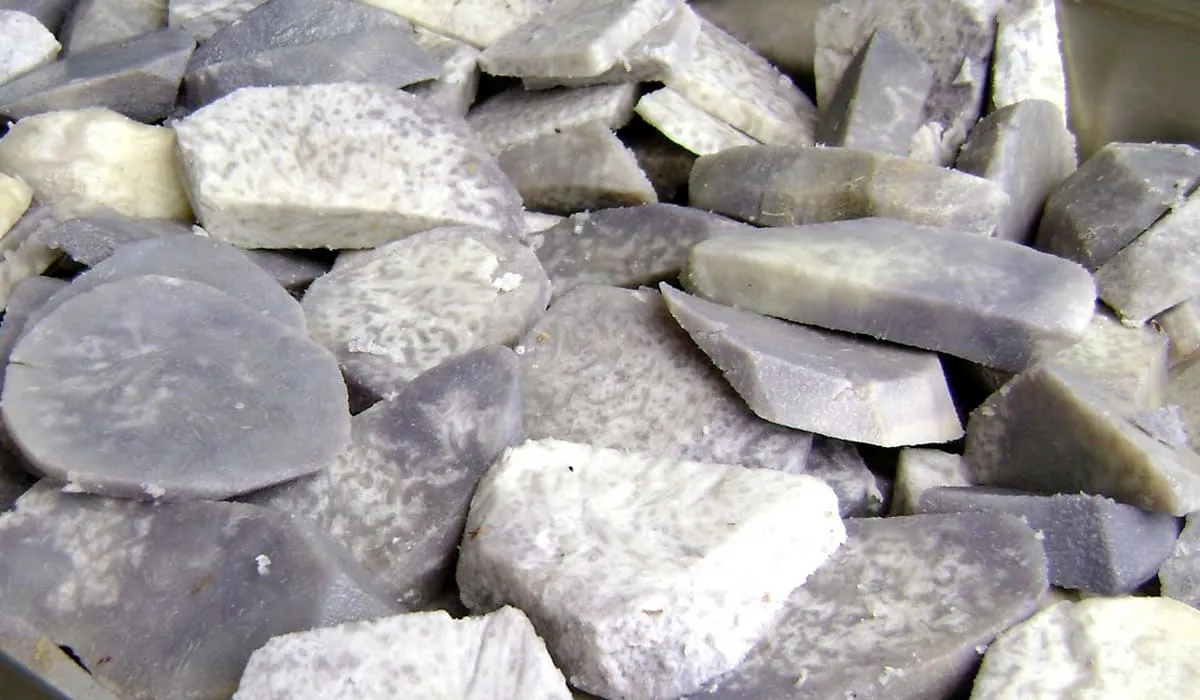
The number of taro varieties is unknown. The dachine tuber is elongated or rounded, with a shape and size similar to celeriac. Its skin is brown, while the flesh is white or grey.
Its growth cycle ranges from 8 to 18 months. The plant requires moist, shaded soil and is often cultivated along the edges of swampy forests. It propagates naturally through lateral shoots. The roots develop and the main axis thickens—this is the edible part of the plant.
Medicinal Virtues
Taro is rich in slow‑release carbohydrates and starch (30 to 33% of its composition). As the starch breaks down gradually, it provides energy while remaining low in fat. This food helps diversify dietary habits and aligns with nutritionists’ recommendations.
Uses
In Martinique, taro is peeled, cut into pieces, and boiled in salted water. It pairs well with local meat and fish dishes. It is also used to make gratins, purées, and soufflés.
It cannot be eaten raw, as it is bitter and irritating due to the presence of calcium oxalate crystals.
Taro must be consumed quickly after harvest, as it is very difficult to store.
Its heart‑shaped leaves are used in a traditional Antillean dish, soupe z’habitants, a very thick soup made from taro leaves.