History
The grapefruit, whose scientific name is Citrus paradisi, is in Martinique what we call the pamplemousse, Citrus maxima. Indeed, smaller than the pomelo (which we locally call chadèque), the grapefruit is believed to be the result of a cross between the pomelo and the orange. Native to the Caribbean, it was first described in Barbados in 1750.
It is, moreover, the only citrus fruit believed to originate from the Caribbean. There were, therefore, grapefruits in Martinique from the beginning of colonization. The pomelo, on the other hand, is thought to come from Malaysia.
Varieties
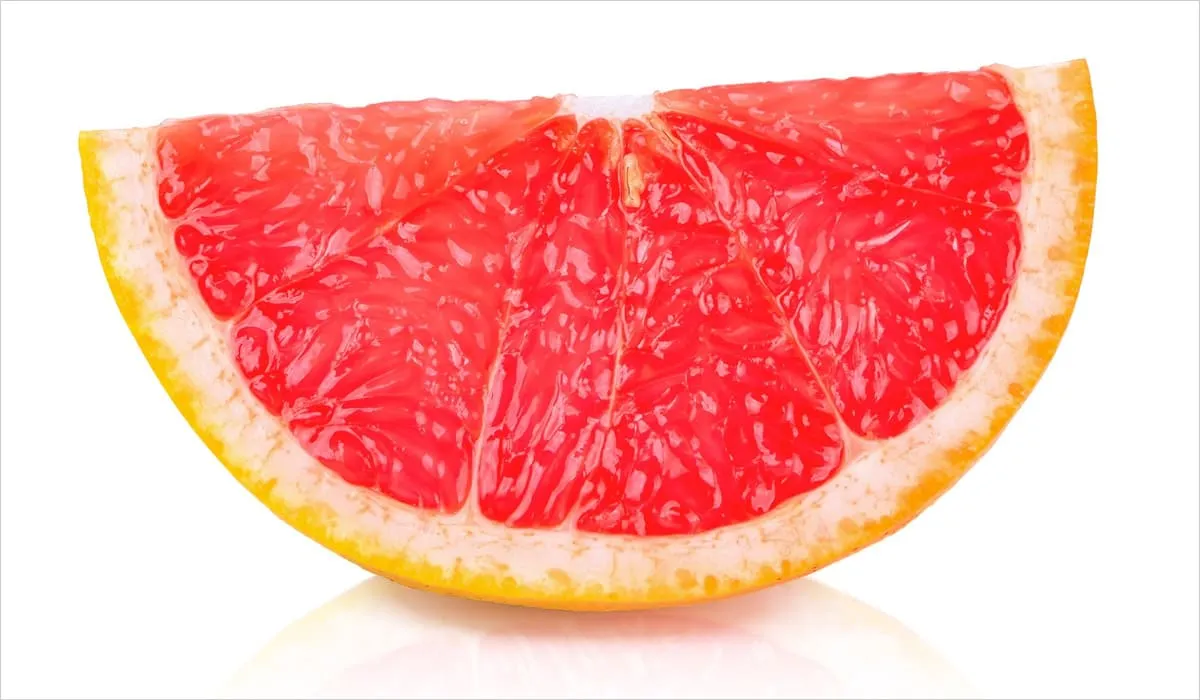
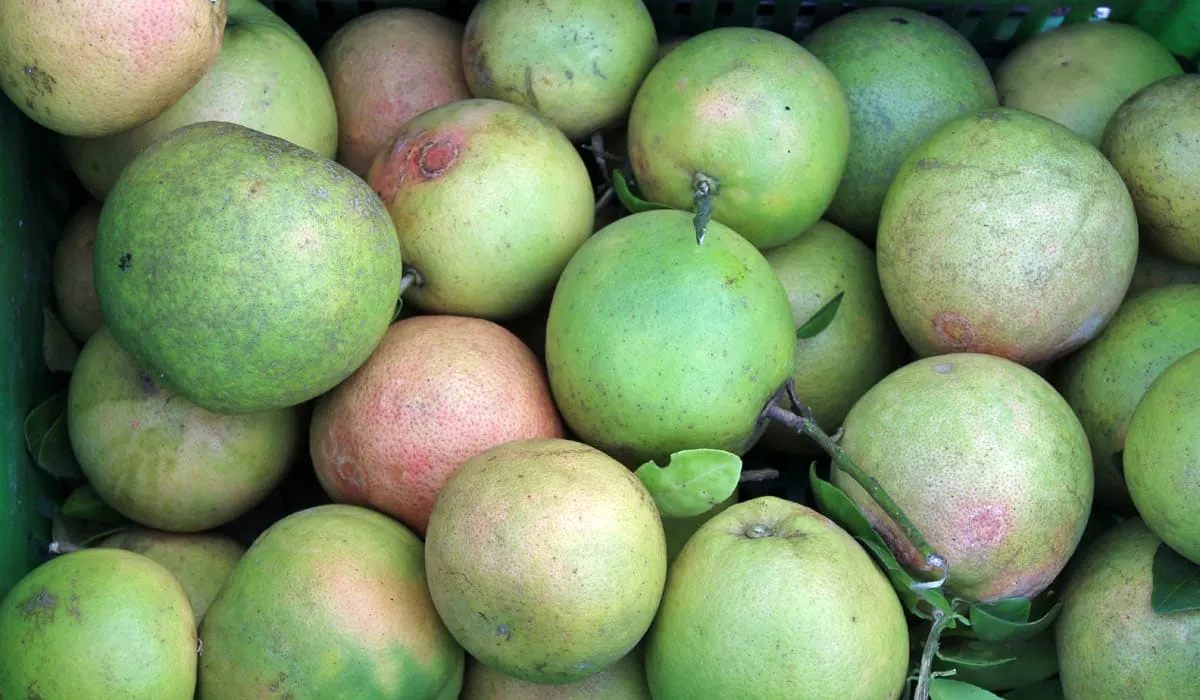
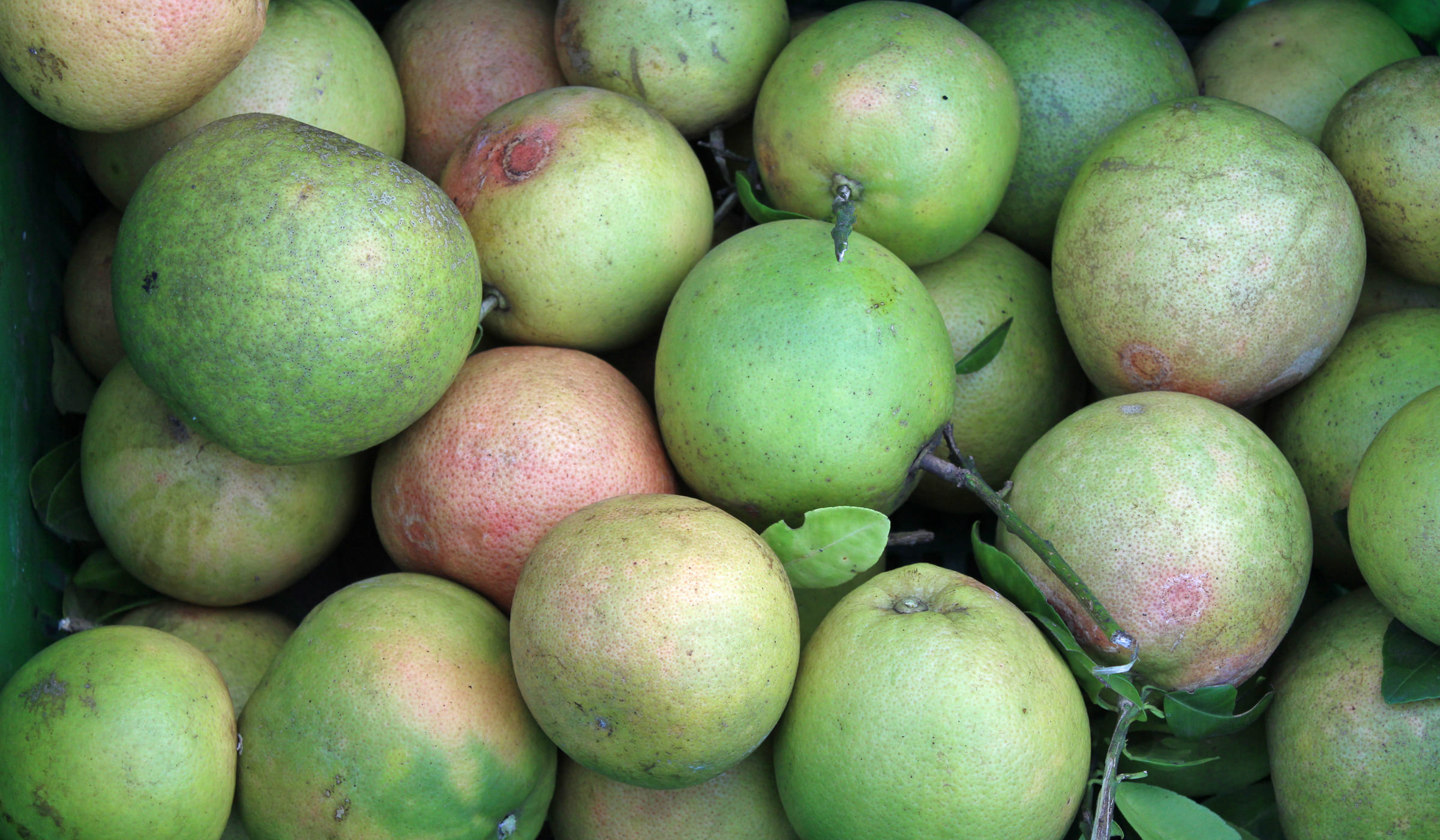
No information is known about the number of grapefruit varieties in the world. In Martinique, we have the varieties Marsh Seedless (seedless), Star Ruby, and Red Blush. However, it is known that the flesh can be either yellow or pink. The skin is thinner than that of the pomelo. The grapefruit is still a large fruit, about 10 cm in diameter (between 8 and 15 cm). Flowering occurs from February to April, and fruiting from October to February.
It can be distinguished from the pomelo by its smooth, hairless leaves.
The grapefruit is extremely juicy, fragrant, and sweet. They are only slightly bitter due to the high temperatures of tropical climates.
Medicinal Properties
The grapefruit has many therapeutic virtues. Rich in vitamin C, it provides the body with energy.
It can be used to treat urinary infections. The potassium it contains helps regulate blood pressure. It protects the body from infections such as the flu, asthma, and allergies by stimulating antibodies. It helps fight cancers such as those of the pancreas, breast, or intestines.
The vitamin A present in grapefruit reduces wrinkles and dark circles. It also increases collagen and elastin, proteins that promote skin rejuvenation.
Finally, grapefruit also helps hair growth and reduces hair loss.
Uses
Grapefruit is eaten fresh and natural. It can also be used to make juices.