History
The guava, whose scientific name is Psidium guajava, comes from South America, probably from the region of present‑day Peru. The word goyave comes from the Arawak term “guayaba”, used by the Indigenous peoples of Hispaniola. It is believed to have been introduced throughout the islands of the Caribbean archipelago by the Carib peoples.
Although we do not have an official date for the introduction of the guava tree in Martinique, we know that the Carib Indians who lived on the island used it to relieve stomach pain.
The leaves were used to smoke meat, and the bark served to preserve and tan leather. The buds of the guava tree were used for women after a miscarriage, with the intention of helping the organs contract.
Varieties
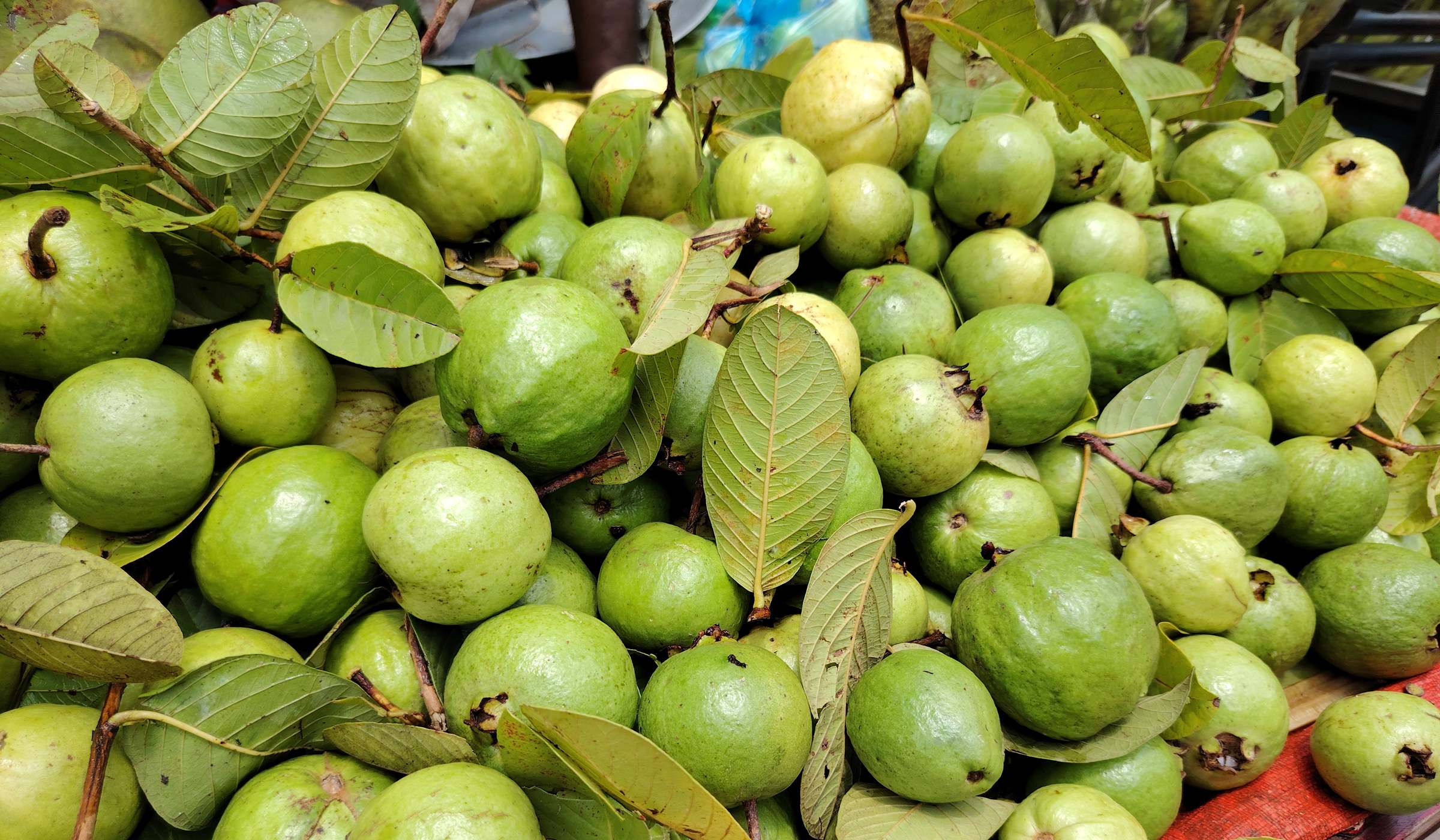
There are more than a hundred varieties of guava. Guavas can vary greatly in size. In Martinique, they can range from the size of a tennis ball to that of a marble.
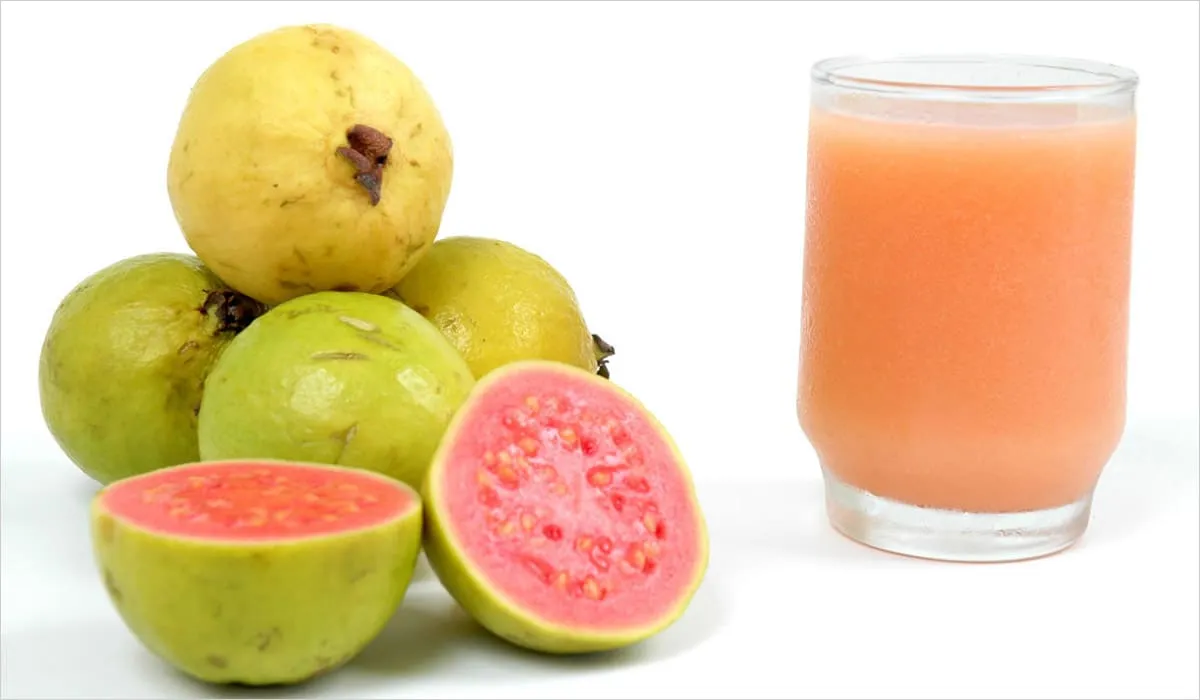
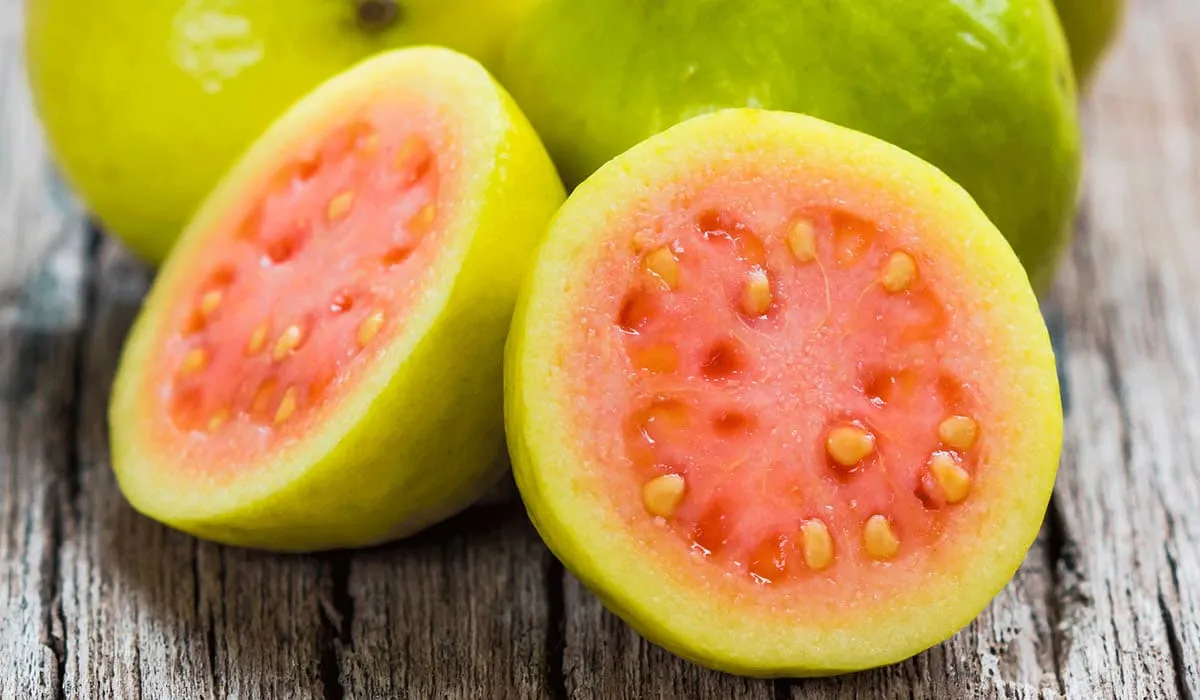
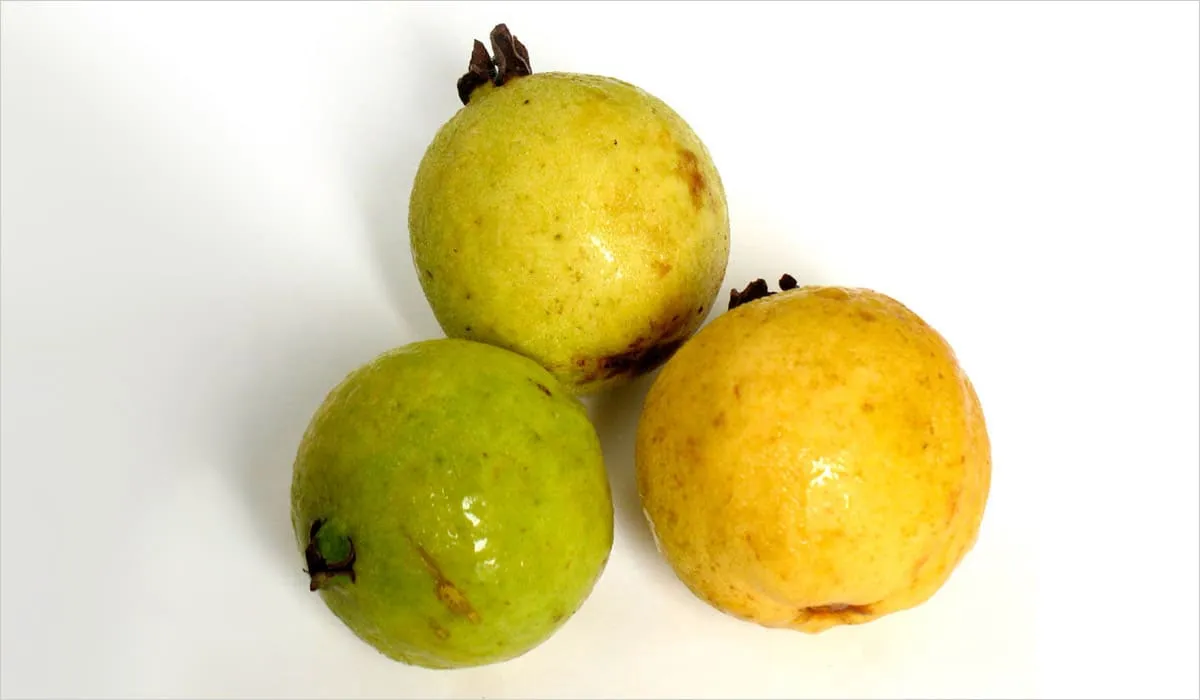
They are generally green before ripening, and one usually waits for the skin to turn yellow before eating them. Some guavas, however, remain green even when fully ripe. So don’t hesitate to feel the fruit to check its ripeness, whatever its color. The flesh can range from bright pink to completely white, depending on the variety.
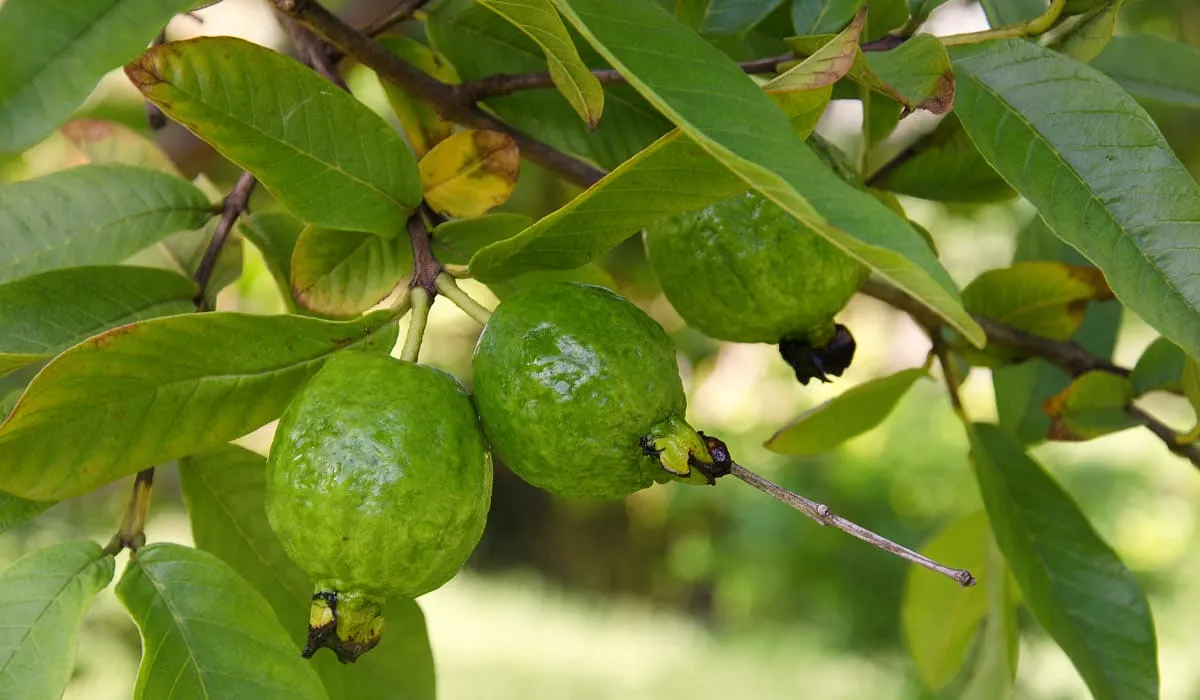
The guava tree is a bushy tree, 2 to 8 meters tall, and is characterized by its young quadrangular (not cylindrical) branches.
The bark of its large branches and trunk peels off in patches. Its entire opposite leaves are elliptical to lance‑shaped. Rough to the touch, they release a strong scent when crushed. The fragrant white flowers, grouped in threes or solitary, give rise to globular, oval, or pear‑shaped fruits.
Medicinal Properties
Today, the guava tree is used to treat gastrointestinal pain and diarrhea. A few leafy buds or guava leaves prepared as an infusion can help stop diarrhea.
Guava is low in calories.
The leaves are also used to treat wounds and skin conditions, either in baths or decoctions. In an infusion with other plants, guava leaves are used as an antidiabetic remedy.
Uses
Guava appears in many forms in Martinique: as jam, jelly, tea made with guava leaves, juice (see photo opposite), alcoholic or non‑alcoholic cocktails, and pastries (Robinson cakes, turnovers, amour caché). To learn more about this delicious fruit, feel free to visit the An Griyav‑la site in Vert‑Pré (Robert).