History
Sweet potato, scientifically known as Ipomoea batatas, is a climbing plant native to tropical America. The date of its introduction to the Caribbean is unknown, but we know that the Arawaks or Taínos consumed it and called it batata.
It is assumed that sweet potato may have arrived in the Caribbean in the belongings of the Arawaks or later during colonization by the sailors navigating the region. After the conquest of the Americas, it spread throughout the world, notably with the help of Spanish and Portuguese explorers.
Varieties
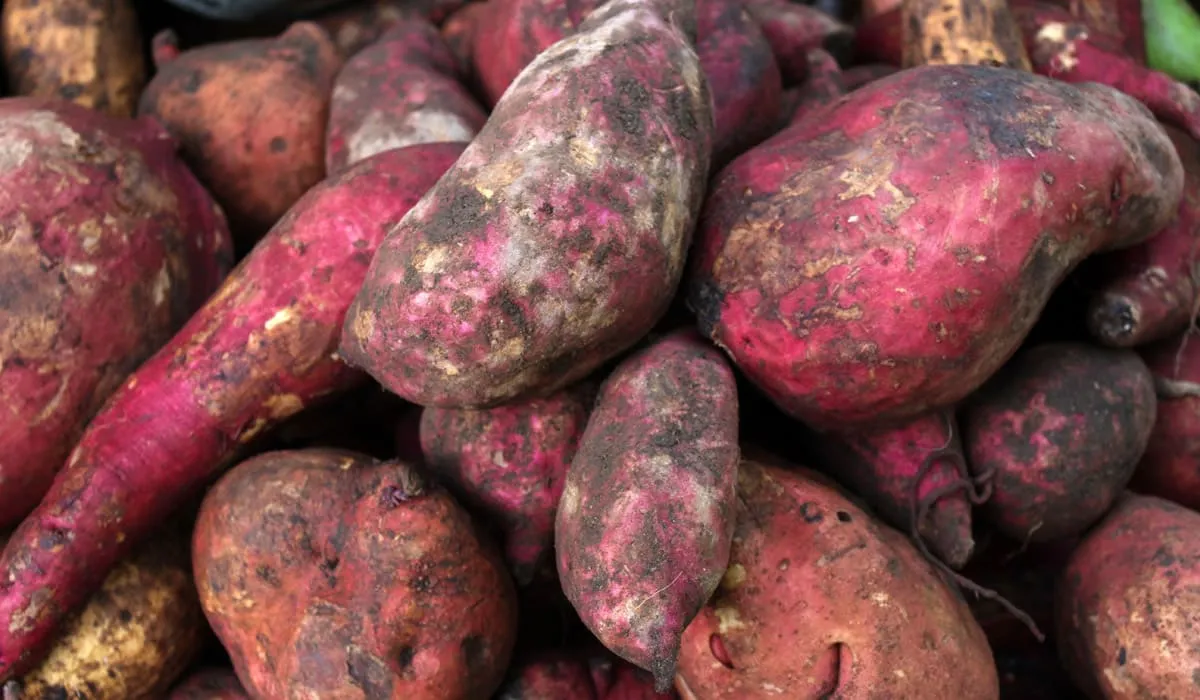
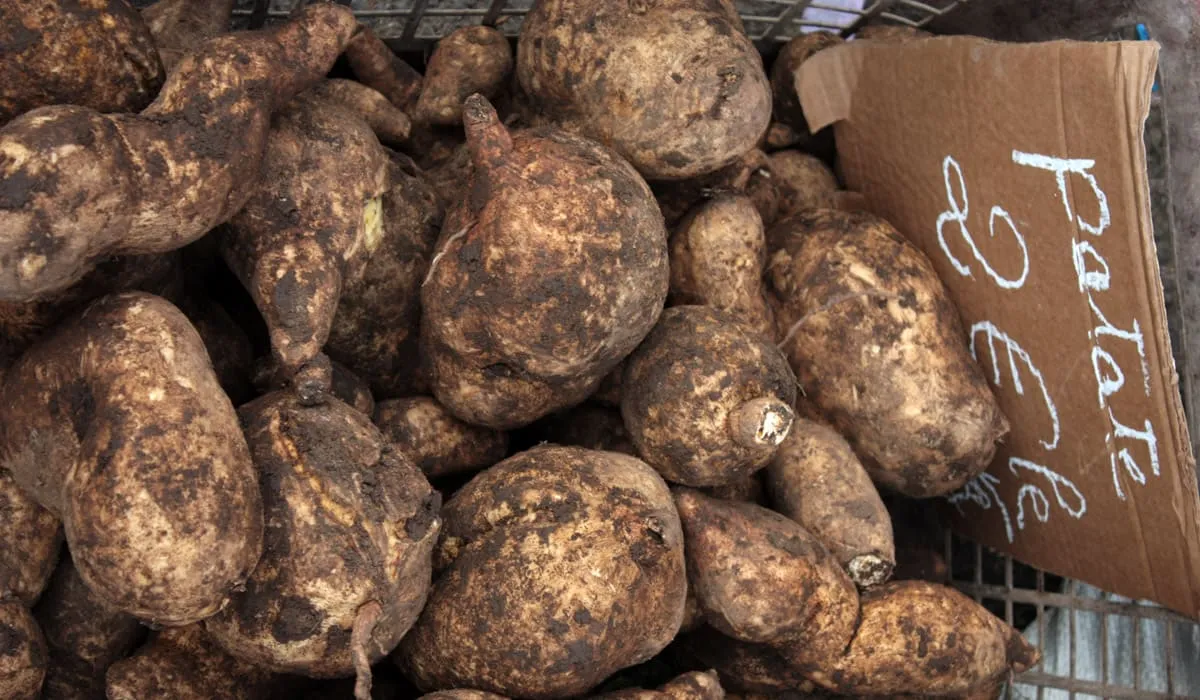
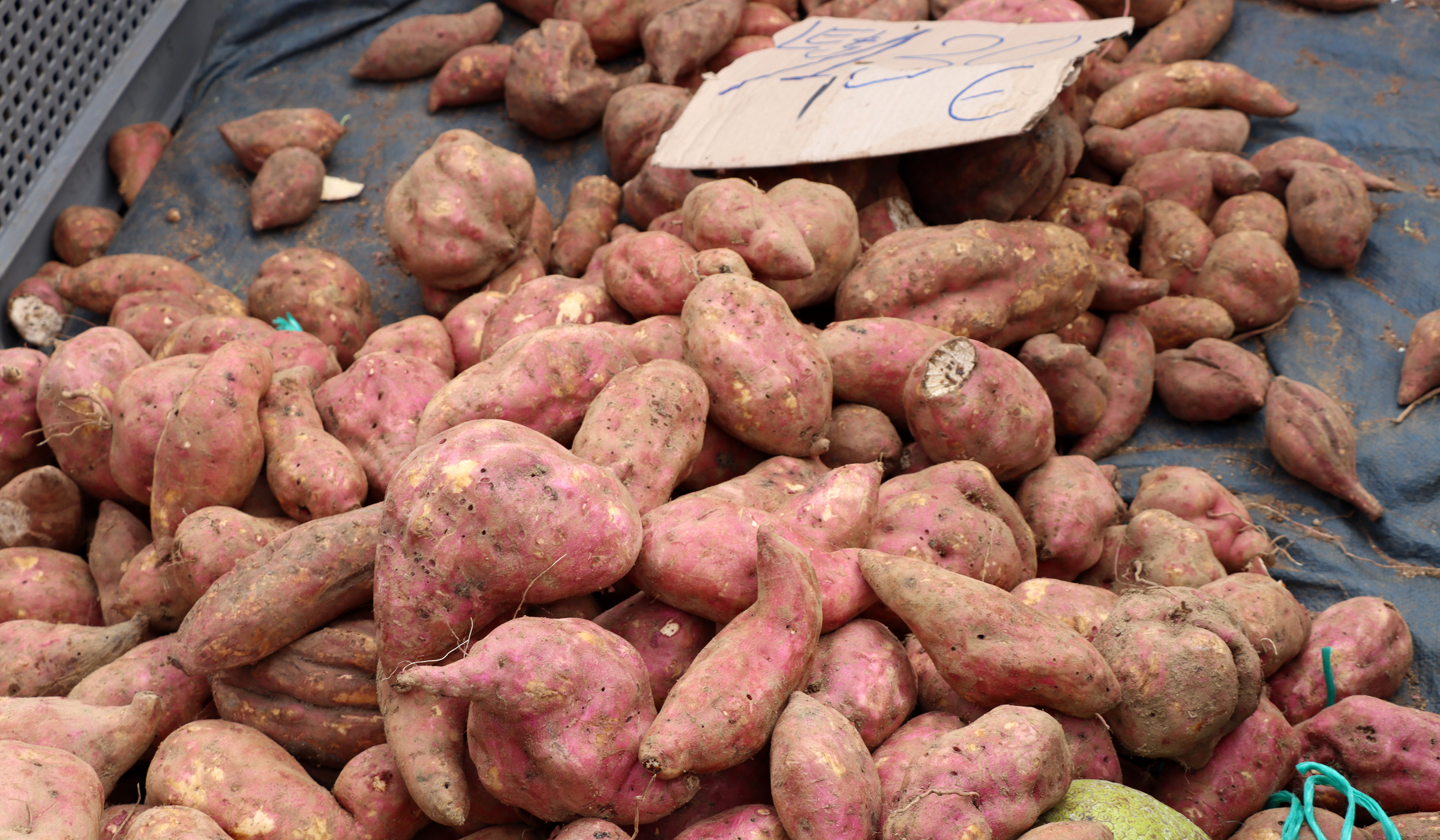
Sweet potato is a perennial plant with creeping stems that can reach several meters in length. It produces edible tubers that vary in shape, often more or less elongated. There are many varieties of sweet potatoes. Depending on the variety, the skin may be beige, brown, yellow, orange, red, or purple. The flesh also varies: white, beige, yellow, orange, red, pink, or purple. Almost every combination of skin and flesh color can be found.
It is an extremely adaptable plant. It grows under a wide range of agricultural conditions and tolerates heat, drought, many diseases and pests, as well as poor or waterlogged soils. It can be cultivated at altitudes up to 2,500 meters between latitudes 40°N and 32°S. Ideal temperatures range from 22 to 33°C.
A full growth cycle requires between 120 and 210 days. During this cycle, its water needs are estimated at 600 mm.
Medicinal properties
Rich in slow‑release carbohydrates, much like pasta or bananas, it is perfectly suited to athletes’ diets.
It is also recommended during weight‑loss periods, particularly in the “Amazonian diet” developed by Dr. Euler Ribeiro.
Uses
Sweet potato is mainly eaten cooked, but it can be used in gratins (see photos opposite), fries, purées, cakes, jams, and more.
Many sweet‑potato‑based recipes exist in Martinique, where it is considered a traditional “légume pays.”