Sacré Cœur de Balata

The Sacré‑Cœur de Balata Church was built in 1915 by the French architect Wulffleff. Monsignor Lequien ordered its construction to accommodate the population displaced from Saint‑Pierre after the 1902 volcanic eruption.

Located on the heights of Fort‑de‑France along the Route de la Trace, in the Balata district, it sits in a humid area that borders the island’s rainforest.

The Balata Church is a replica of the Sacré‑Cœur Basilica in Montmartre.

Photo gallery
Sacré‑Cœur de Balata Church

Village d'Antan

The Village d’Antan is a garden located between Le Vauclin and Le François, where you can experience life in a natural environment up close. The project is led by Suzelle Montjoly, a passionate Martiniquan who maintains this arboretum of tropical plants.

Since 1991, she has been planting, cultivating, and shaping more than one hectare of land that was originally dry and not very fertile. Her commitment to preserving Martinique’s plant heritage has allowed a true ecosystem to flourish.

The site also features traditional wooden houses. During the guided tour, you’ll discover part of Martinique’s flora, lovingly maintained by a family of enthusiasts.

It is possible to eat on-site and enjoy a tasting session, provided it is booked before the visit.

A parking area is available further down.

Photo gallery
Carbet in front of the entrance to the Village d'Antan
Village d'Antan
Village d'Antan
Village d'Antan
Village d'Antan

Habitation Chalvet

Habitation Chalvet, also known as Habitation La Capot, was a sugar estate in the 18th century that had to reinvent itself following the sugar crisis. Before that, it was a plantation where cacao was cultivated. The remains of several buildings—such as a chimney, sugar mill, and purging house—attest to the site's once-thriving industrial activity.

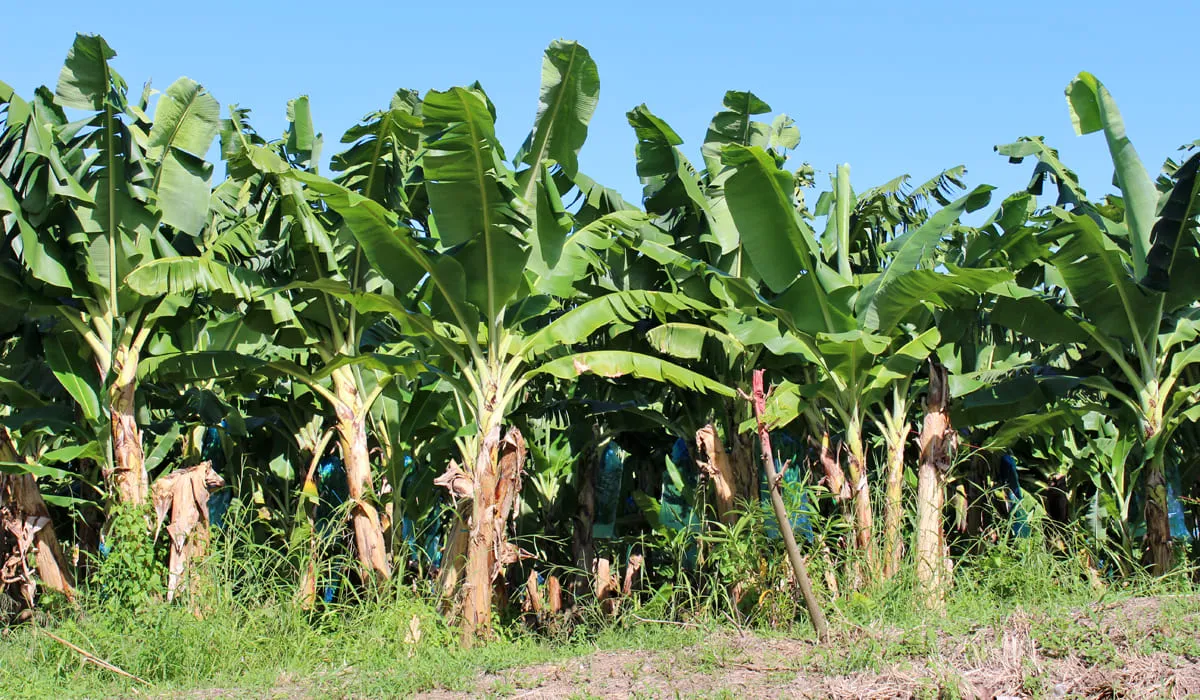
On this authentic site, now repurposed as a place of leisure, a “Barbette battery” was installed around 1711 to protect the dock and storage facilities. After periods of yam cultivation and greenhouse horticulture, the agricultural activity now focuses mainly on bananas, along with pineapples and sugarcane. In addition to banana production, the estate also features a Creole garden.

Visitors can also explore medicinal plant gardens. Above all, Habitation Chalvet is remembered by locals as the scene of the tragic events of February 1974.

In February 1974, field workers went on strike to demand a five-franc increase in their daily wage from the landowners—known as “Békés,” wealthy descendants of former colonists who have long held agricultural lands in Martinique and still own many of the island’s businesses.

The landowners refused. As days passed, tensions escalated due to the lack of negotiations. The Békés called in the police, followed by armed forces. The latter opened fire on the strikers, killing two agricultural workers: Rénor Ilmany (55 years old) and Georges Marie-Louise (19 years old). Many others were injured.

This event remains deeply rooted in Martinique’s collective memory. It inspired a song by artist Kolo Barst titled Févriyé 74. Each year, the local tourism office organizes a commemoration at the site.
 

Photo gallery
Banana trees at Habitation Chalvet

Domaine d'Émeraude

Domaine d'Émeraude was inaugurated in the town of Morne Rouge on February 28, 2011. Previously the site was the location of the Maison de la Nature. Managed by the Parc Naturel Régional Natural, it is a perfect complement to the Jardin de Balata on the same Route de la Trace.

It extends over a vast wooded property covering an area of 22 hectares belonging to the Department of Martinique, where a hundred plant species can be identified by more than three miles of trails located the heart of a forest.

An exploration pavilion presents the natural history of the island, vegetation, soil formation, wildlife and the lively local flora and playful way.

Domaine d'Émeraude wants to be a awareness tool for all life forms, are presented where the elements of nature, biodiversity, ecosystems of Martinique and the development of reports man with nature. The visitor is placed in the position of an explorer who discovers for the first time the richness of tropical nature.

The visitor must be curious and observant and will be filled on ancestral know-how in Creole Garden (ornamental aspect, feeder and curative), rare species or endangered soon with an arboretum with balata, cabellier, etc...

It's also a place for experimentation plant (currently greenhouse cultivation, excluding soil with coco as the ancients did). It also allows the reception of groups in, for example, of environmental education missions of the Park.

To get there from Fort-de-France, follow the route of the Trace (NR3), pass the crossroads of two-Choux until the end of the great descent that leads to Morne Rouge and turn before the bridge.

Jardin de Balata

If there are two unmissable visits to do when you go to Martinique, it is the Habitation Clément and Jardin de Balata. It was in 1982 that Jean-Philippe Thoze, horticulturist, landscape designer and artist in the soul returns to the footsteps of his childhood home of his Creole grandparents. From there, born a passion for botany that will lead him to the four corners of the world.

The garden is organized around the family home in typical Creole architecture, is the result of a perfect alchemy between a homecoming and an atypical artist.

The garden opened its doors for the first time on 19 April 1986 and takes its name from the many old trees which where on the land. The property acquired by the father of Jean-Philippe Thoze during the war, was then a simple cottage-style house looking like a farm. Subsequently, it was sold to the grandmother of the current owner who first used as a second home as a main residence and during his retirement. At his death the property was abandoned during ten years.

Jean-Philippe Thoze, horticulturist at the head of a landscaping company, used it as storage place for abandoned plants he used to bring of his many travels. Then came the day when the family decides to sell and it is naturally to Jean-Philippe Thoze they asked to clear. On this occasion he rediscovers Balata and literally fell in love. He bought the property, and from what had become a savanna where nature had reclaimed its rights, he creates progressively a garden that now houses more than 3,000 species of tropical plants.

To get there from Lamentin, take RN5 towards Morne Rouge, from Fort-de-France take the "Route de Balata / Route de la Trace" towards the Morne Rouge.

Photo gallery
Hummingbirds in the Balata Garden
Red balisier in the Balata Garden
Red flower in the Balata garden
Plant in the Balata Garden
Red Ixora at Balata Garden
White flower in the Balata garden
Purple flower in the Balata garden
Green plant in the Balata garden
Hummingbirds in the Balata Garden
Mannequins wearing traditional clothing at the Balata Garden House
Green plant in the Balata garden
Palm fruits in the Balata garden
Pink flower in the Balata garden
Nénuphar au jardin de Balata

Jardin botanique

The botanical garden of Carbet "Habitation Latouche" is one of the oldest habitation of Martinique. Founded in 1643, it extended at this period over an area of ​​15 hectares. For over two centuries, successive productions were cultivated there like sugar, rum, cocoa, tobacco, pottery, etc...

Although Habitation Latouche was destroyed by the eruption of Mount Pelee but many remains of its buildings are still present as the house, the cassava factory, the indigo factory, sugar factory, aqueduct, etc..

Creator of the famous Jardin de Balata in Fort-de-France, Jean-Philippe Thoze also made this site a unique sublimated place by its botanical compositions. His work as a natural colourist has once again expressed in another natural "theater" totally new and different. This time he bet on the colored masses playing on the remains of the site, using the backdrop of water plants. He built the Habitation of Captain Latouche with dried plants, cactus, lotus, etc...

Jardin des papillons

200 meters after the tunnel of Carbet towards Saint-Pierre, the Jardin des Papillons (Garden of butterflies) is a haven of greenery which mixed flora, fauna and music. Like the botanical garden, it is also installed on the ancient lands of Habitation Latouche.

You can admire thousands of butterflies and other insects, but the Jardin des Papillons is not only that. It is a true repository of flora and fauna, cultural space and a "back garden" dedicated to the culture and traditions of the Caribbean. At the heart of this garden is a "Theatre de Verdure" where occur many artists for unforgettable parties and exhibitions.

For ballads lovers of ballads, it is possible to climb to the Fort or the Vierge des Marins a half walk to admire the spectacular view over the bay of Saint-Pierre, who will forever be etched in your memory. A craft shop is also available.

An griyav la

"An Griyav la" is a former sugar plantation that produced sugar cane to feed the factory of the town Robert.

Today, the plantation of 16.5 hectares mainly produces guava and has a garden with many trees and flowers.

With guava in Martinique, we make juice, jam, jelly basically. You can enjoy it all on site. But you can also find plenty of other local cultures. It is possible to spend the day and have lunch (local food tasting) if you book.

To get there, go towards the Vert-Pre / Gros Morne direction.

Photo gallery
Goyaviers portant des fruits et des fleurs
Goyaves coupées en deux

Jardin de la montagne

Located to the left of the Montagne du Vauclin, the Jardin de la Montagne (Garden of the Mountain) offers a magnificent panoramic view (504 meters above sea level) over the bay of François. The garden benefits from a bio-climate which has allowed its owners to create a superb floral garden.

In this remarkable site, food plants and familiar nourishing trees are associated with the richness of tropical flora. The garden is spread over one hectare around the house. There are several cultural spaces there.

The vegetable garden is organized according to the criteria of the Creole garden where there is a perfect balance between vegetable plants and fruit trees. A space is also devoted to aromatic and medicinal plants.

In this garden, the floral and ornamental species compete in their beauty and their colors: Tecoma stans, crossanda, begonia, porcelain rose, balisier, alpinia, birds of paradise, ornamental banana, bougainvillea and many others...

It is possible to buy flowers on site.

To get there from the village of Vauclin, head towards the town of Saint-Esprit and then turn right towards the D18.

Photo gallery
Panneau d'affichage du jardin de la Montagne
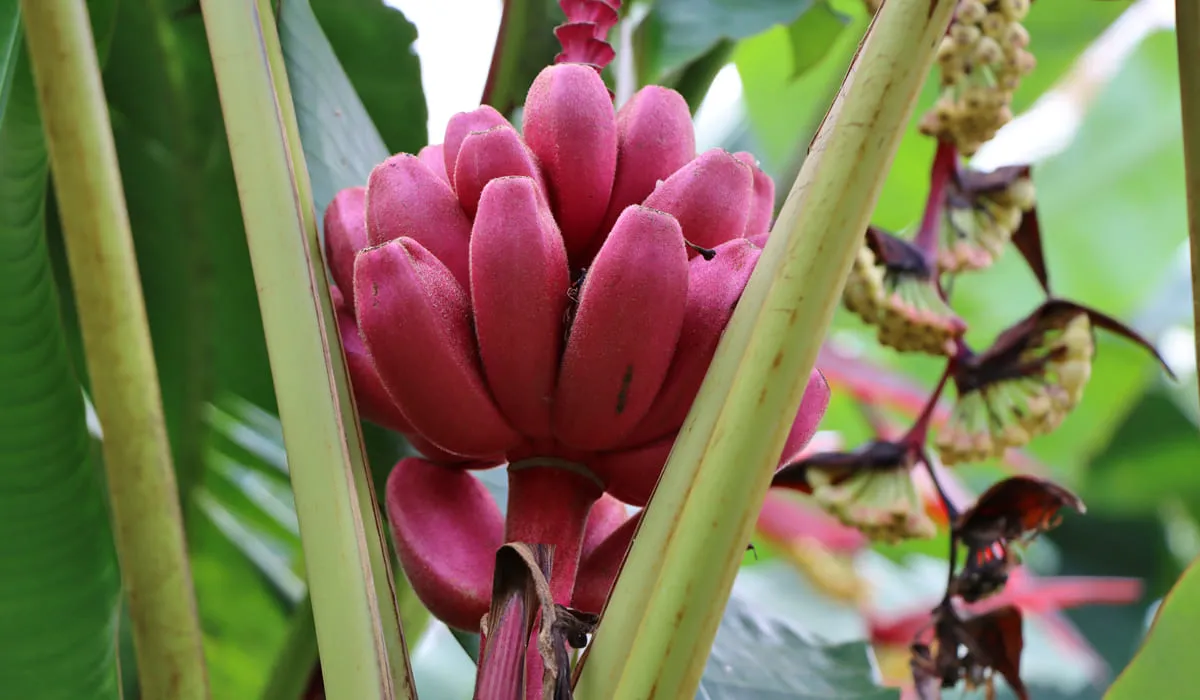
Bananes rose au jardin de la montagne
Cacao au jardin de la montagne
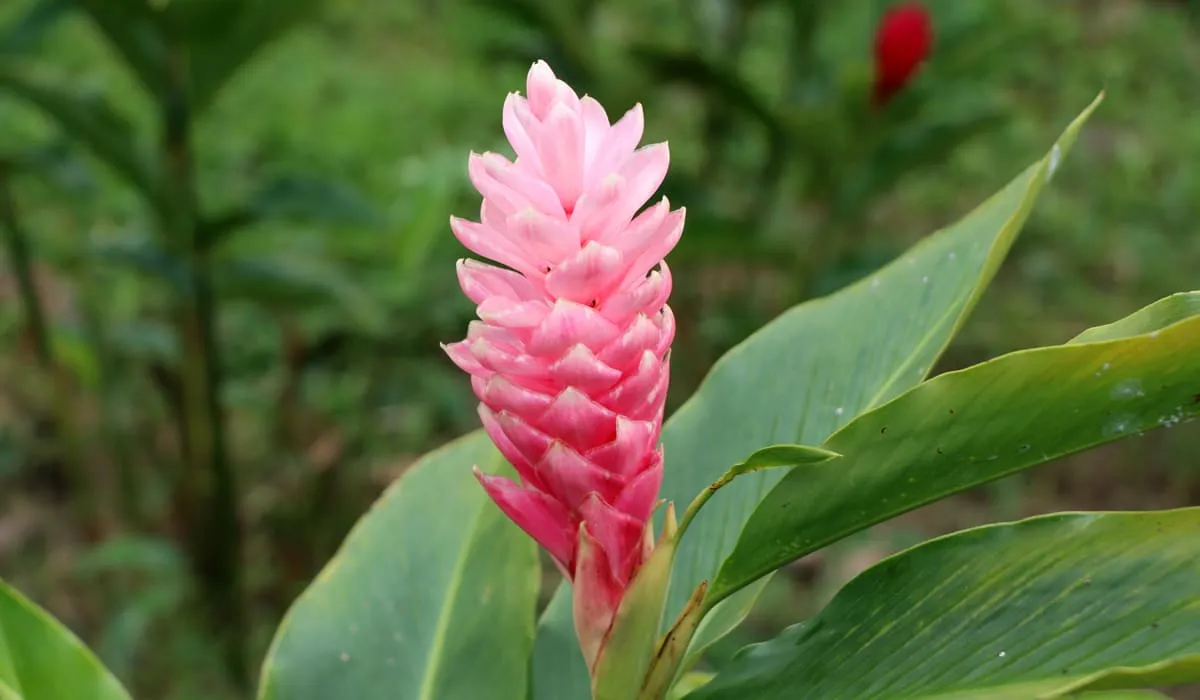
Balisier rose au jardin de la montagne
Hibiscus au jardin de la montagne