Habitation la Sucrerie

Habitation La Sucrerie des Anses-d’Arlet is a beautiful estate house dating back to the late 18th century, bearing witness to the industrial history of the Hayot family. Today, it belongs to the Hayot Group, along with Habitation Pécoul and Habitation Clément.

In 1788, Jean-François Hayot left his coffee plantation in Saint-Esprit and purchased La Sucrerie, which was then the most prominent estate in the Anses-d’Arlet area. By 1845, his heir Michel Hayot—mayor of the southern commune (Anses-d’Arlet, Le Diamant, Sainte-Luce)—turned toward sugarcane cultivation in the context of the Industrial Revolution.

The mid-19th-century acquisition of Habitation Poterie and neighboring properties in Trois-Îlets led to industrial diversification, including the production of terracotta building materials such as bricks and tiles. These estates also cultivated sugarcane, which was processed at the Pointe Simon factory (now the Fort-de-France taxi terminal).

A pivotal moment came in 1868 when Octave Hayot (1843–1892) was sent by his father, Louis Hayot, to the newly established Usine du François to work alongside Émile Bougenot, a French mechanical engineer who had come to Martinique to develop a new generation of factories. Under Bougenot’s guidance, Octave learned both the industrial techniques of sugar production and the workings of a modern, shareholder-based enterprise.

This fusion of technical innovation and local production capacity sparked a major industrial success. At the end of 1868, Octave Hayot gathered several planters from the Rivière-Salée region—starting with his family’s estates in Trois-Îlets—to found, with Bougenot’s help, the Central Factory of Petit-Bourg on Habitation Génipa.

In the following years, competition among factory owners led the Hayot family to take control of neighboring estates to secure the factory’s supply chain and long-term viability. Octave Hayot is credited with initiating the agricultural development of the Rivière-Salée plain, which had previously been considered unsuitable for farming due to its marshy terrain. He died prematurely in 1892, and his relatives took over the factory’s management during a pivotal period in Martinique’s history.

Later, the eruption of Mount Pelée caused the deaths of many merchants, positioning factory owners as key players in the island’s economy. Descendants such as Joseph, Simon, Saint-Michel, Léon, and Yves Hayot played a major role in the sugar industry, managing numerous factories in Le Robert, Le François, and Lareinty until the late 1960s, when the sugar crisis brought an end to cane sugar production.

The family then shifted its focus to consumer goods retail, founding the Hayot Group, which now owns several stores and businesses across the island.

To get there, take the D7 road to the entrance of the Anses-d’Arlet village. The estate is located at the intersection of the D7 and D37. You’ll need to park your vehicle at the village entrance.
Montgérald Habitation

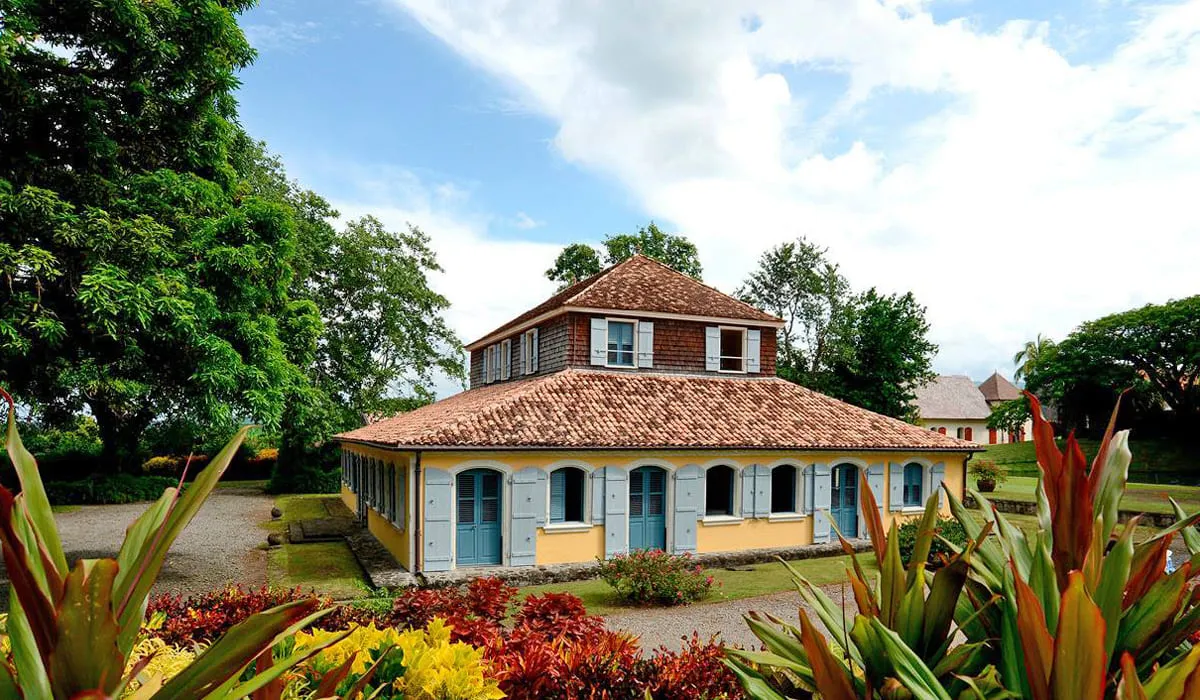
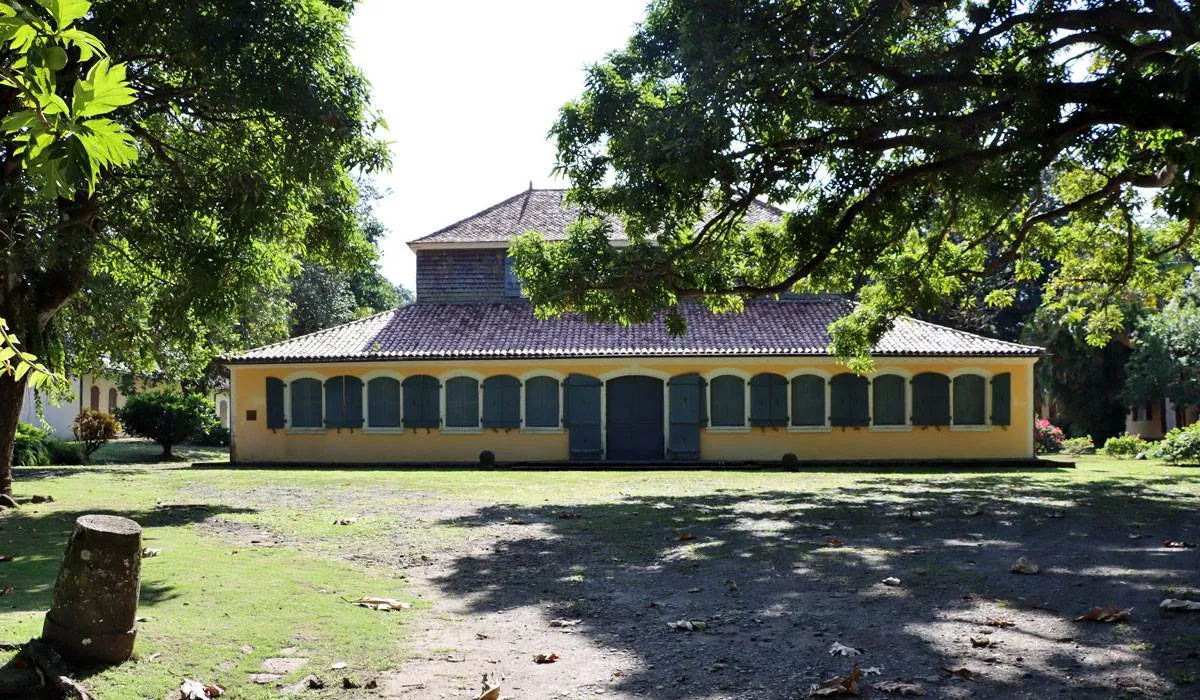
Montgérald Habitation is an old estate house located in Le Marin. The residence was once occupied by the Charron family, one of the wealthiest families of the period. The structure is made of wood and covered with tiles.

In 1869, Montgérald Habitation was built near the central factory of Le Marin. It supplied sugarcane to the factory for nearly a century, until the industrial site eventually closed. The main house, featuring a façade made of composite materials—wood and stone—was built in a “U” shape, a common architectural layout in Martinique.

The Montgérald Habitation estate has been listed as a historical monument since June 3, 1993.

Please note that photography is only permitted from the outside.

Also, be aware that the site can only be visited during the European Heritage Days.

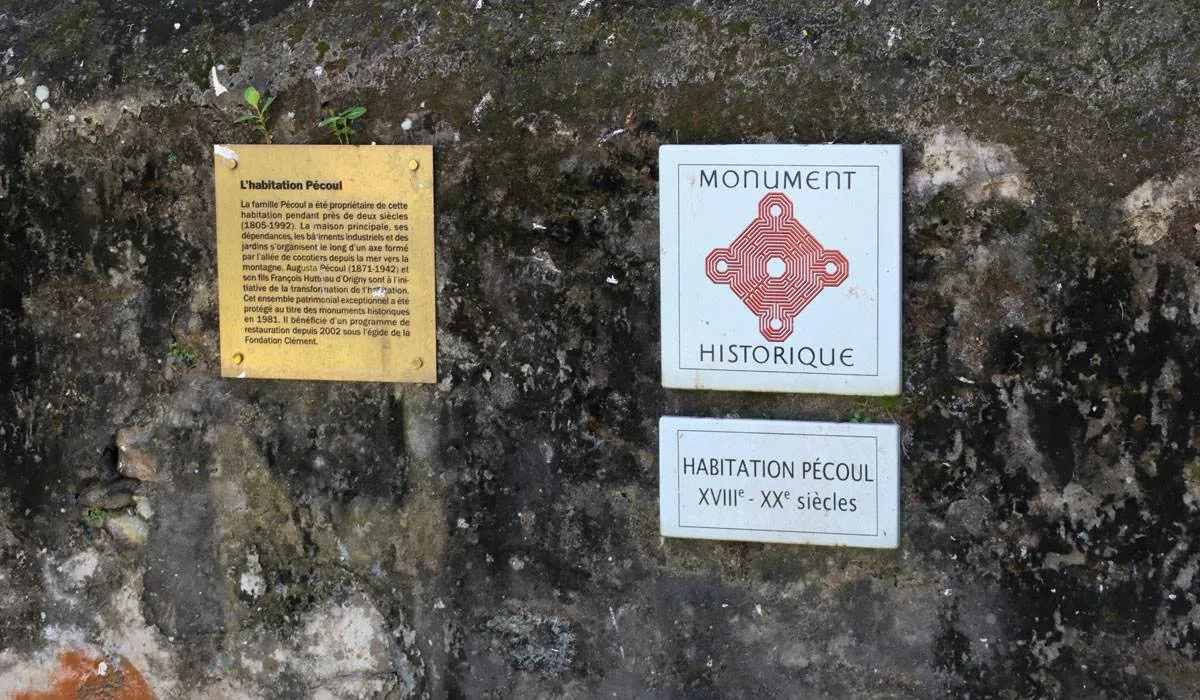
Habitation Pécoul

Habitation Pécoul is a large Creole-style house whose entrance is embellished by an avenue of palm trees. Formerly called "Habitation Basse-Pointe", Habitation Pécoul was originally owned by Claude Pocquet then Director General of the Company of Senegal to the Isles, militia captain, Advisor to Sovereign Council of Martinique, in the second half 17th century.

According to Father Labat, it "was off twelve hundred was not about three miles high" Subsequently, it was later cut to length for the benefit of several owners until 1745. It was then sent to owners Paris throughout the 18th century and acquired in 1777 by Jean François Pécoul, overseer of the son of the house owner and Habitation La Montagne in Saint-Pierre. He will give it its final name.

The main house was already the center of the spatial organization around which shone the boxes for workers and industrial buildings. The youngest son of Jean François Pécoul, Auguste François, became a member of the Martinique in 1848. His daughter, Augusta, married to Henry Origny settled on his son's company Home, François Louis of Origny in 1920.

It is she who will restore the assembly in its current form. Habitation Pécoul and facades, have been classified historical monuments in 1981. In 2002, the property has come all patrimonial formed within Groupe Bernard Hayot by Habitation Clément and Habitation la Sucrerie. Habitation Pécoul is between Habitation Moulin l'Etang in the west et l'Habitation Chalvet in the east.

It is accessed through a large driveway with coconut trees. The property lies on a land strip and has a total area of ​​about 176 hectares. It is located about 500 meters from the sea. The main house is the center of the domain.

The site is still fed by diversion canals of Rivière Poquet (river) water provide a stunning pool in the heart of a tropical garden. Outbuildings, boxes of workers and the gardens are located north of the house.

The colonial style house and its beautiful surroundings that can be visited during the European Heritage Days.

Photo gallery
Habitation Pécoul
Habitation Pécoul
Habitation Pécoul
Habitation Pécoul
Entrée de l'Habitation Pécoul
Panneau site Monument Historique