Salines pond

Near the Salines beach lies a vast protected area that includes the Salines pond (l'étang des Salines in French). This large pond shelters exceptional fauna and flora. Although today it is a protected site, in the past—thanks to its location and the resources it offered—it hosted a sugar plantation, and later served as agricultural land. Toward the end of the 20th century, viticulture was introduced at the Salines pond.

Since 1998, the pond has been protected by the Coastal Conservatory. In 1999, it was recognized as a wetland of international importance under the Ramsar Convention. Today, the Association for Memory and Heritage of Sainte-Anne (AMEPAS) helps visitors discover this unique site in Martinique. The pond has been developed with a boardwalk trail that allows you to admire the local fauna and flora up close. Its bottoms are muddy, grassy, and sandy.

The Salines pond is a haven for wildlife. Thirty-eight species of fish, five species of shrimp, and ten species of crabs live here. Both freshwater fish and those adapted to saltwater environments can be found (such as garfish, mullet, pike, eel, moray, and sole).

You can also observe migratory birds. These birds, coming from North America, stop here for a few hours or days—sometimes for reproduction—before continuing their journey to spend the winter in South America. Migratory birds are mainly visible during the last quarter of the year.

Photo gallery
Salines pond
Salines pond
Crab at Salines pond
Crabs at Salines pond
Mangroves
Mangroves
Salines pond
Salines pond
Salines pond
Salines pond
Salines pond
Salines pond
Salines pond
Salines pond
Vegetation at Salines pond

Saut Argis

In the Lessema district, the Saut Argis waterfalls are located in a forest park covering approximately one hectare.

The slope is concave, allowing for the installation of a wooden structure. Two waterfalls have been formed.

The area was recently developed by the Parc Régional Naturel de la Martinique (Martinique Regional Nature Park) and the municipality of Gros-Morne. Stairs lead to the waterfalls.

Tables and benches are also provided under shelters for those who wish to picnic there.

The site is currently closed to the public.

Photo gallery
Saut Argis Waterfall
Path leading to the Saut Argis Waterfall
Red torch ginger
Red torch ginger
Saut Argis Waterfall

Montagne du Vauclin

Montagne du Vauclin is the highest point in the south of the island. It rises to 504 meters. Although it's not very popular, it does offer a pretty route, with a magnificent panorama of the town of Le Vauclin at the end.

It is also a place of pilgrimage for the many Christians in the south of the island. It is home to one of the most popular Stations of the Cross for Catholics in the south of the island. It is also an agricultural area. Numerous sheep breeders and farmers have made it their "home", and you can see plantations of watermelons, melons, onions, tomatoes, lettuce, and bananas.

This was also how it was used during the colonization period. It was a place of refuge for freed Blacks from Saint Lucia who had come to free the slaves of Martinique. 

Its heights were appreciated for overseeing the surrounding area at a time when attacks between European powers were raging.

To get there, head for the South Atlantic and the commune of Le Vauclin, then take the road to Saint-Esprit for about 4 km, then turn left (if you're coming from Le Vauclin) at the sign for "le calvaire, chemin de croix N°2". Follow the path to the top of the hill. Here you can park your car and start your hike.

The hike takes two hours.

Photo gallery
Montagne du Vauclin
Montagne du Vauclin
View from the montagne du Vauclin
Montagne du Vauclin
Montagne du Vauclin

Coeur Bouliki

Cœur Bouliki is a small natural spot located in the municipality of Saint-Joseph. It will delight those who love nature and want to escape the crowded beaches of the south of the island.

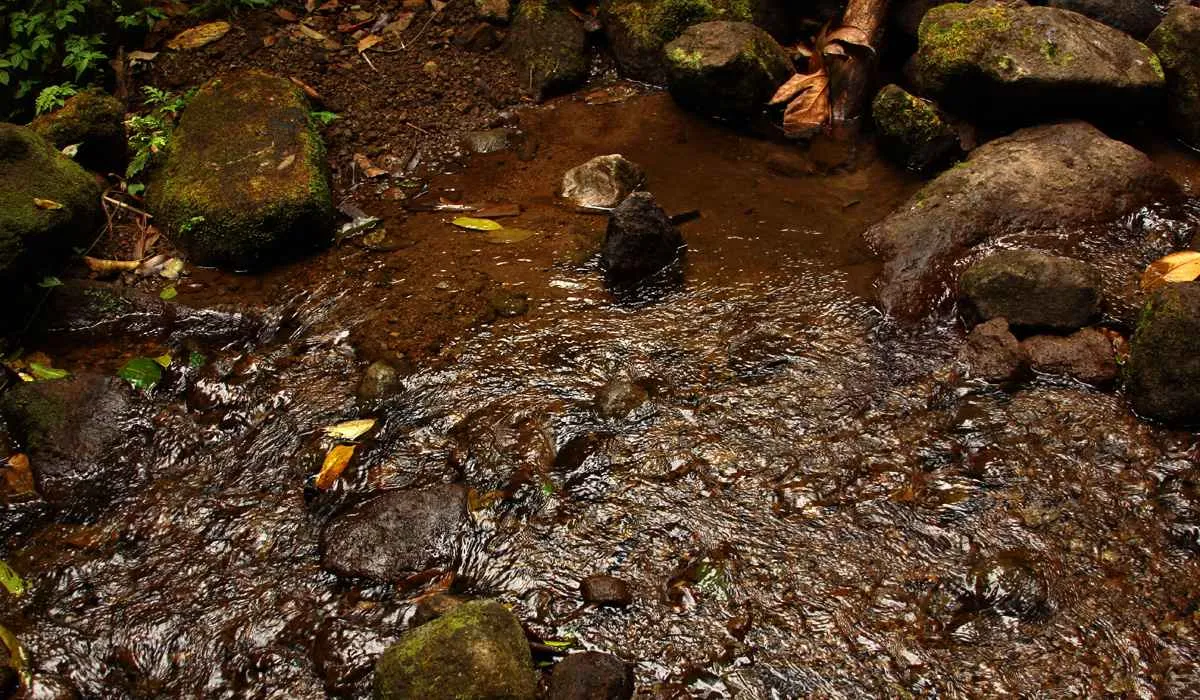
It is a river in the middle of the forest, offering lush greenery where hikers can stroll and those who prefer swimming can enjoy a refreshing dip in the Blanche River.
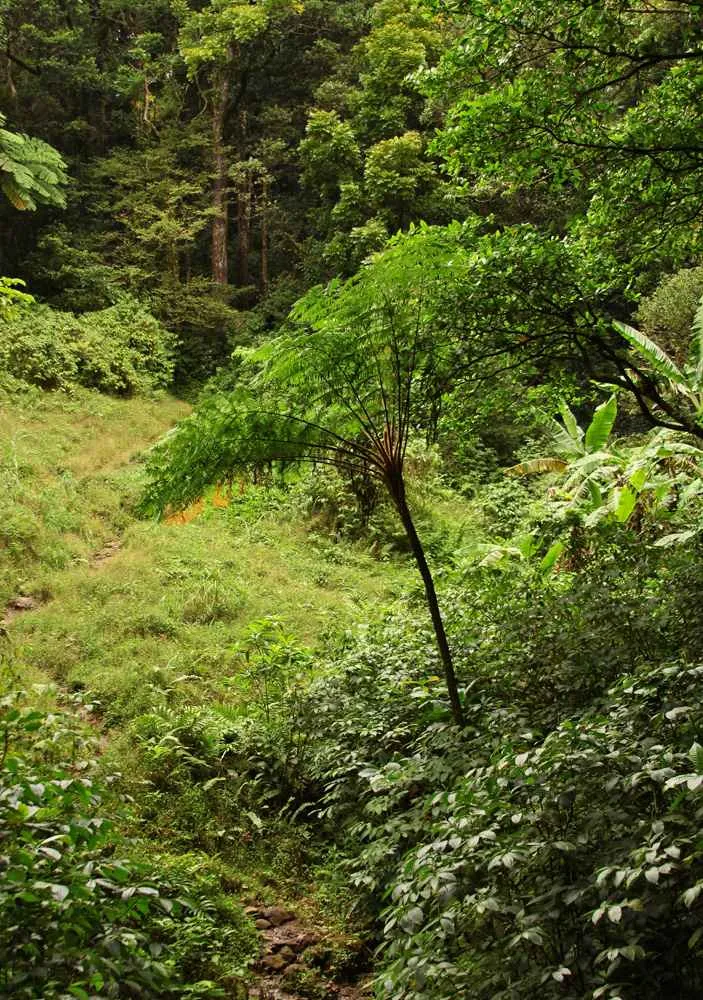
A marked trail allows visitors to discover the tropical forest flora. 
Picnics are also possible, with tables and benches provided for this purpose.

The site is regularly maintained by the town of Saint-Joseph.

It is also a popular training ground for the military.

To get to Cœur Bouliki, follow the signs to the town of Saint-Joseph, then take the D15b towards “Morne les olives” and turn left.

Photo gallery
Cœur Bouliki
Cœur Bouliki
Cœur Bouliki
Cœur Bouliki
Cœur Bouliki
Cœur Bouliki
Cœur Bouliki
Cœur Bouliki
Cœur Bouliki
Cœur Bouliki
Cœur Bouliki
Cœur Bouliki
Cœur Bouliki
Cœur Bouliki
Cœur Bouliki
Cœur Bouliki
Cœur Bouliki
Cœur Bouliki

Habitation Céron

Habitation Ceron is a former sugar factory built in the early days of colonization in 1685, located in the town of Prêcheur. It was a place of growing coffee, cocoa, cassava and banana, but above all, a place of business of the sugar cane (rum and sugar cane). It is now partly in ruins, destroyed by the eruption of Mount Pelee the May 8, 1902.

Vestiges of its sugar past are still present because some buildings have withstood the lavas of the Mount Pelee but the Habitation is now primarily a tropical garden. A restaurant on site will allow you to taste the local flavors including many seafood (crayfish, chatrou, conch, fish) if you choose to eat there.

As an activity, you can make a very nice hike to a small waterfall and a pool for a nice river bath or excursions using a quad.

Photo gallery
Habitation Céron
Habitation Céron
Jardin de lHabitation Céron
Étang de l'Habitation Céron

Jardin des papillons

200 meters after the tunnel of Carbet towards Saint-Pierre, the Jardin des Papillons (Garden of butterflies) is a haven of greenery which mixed flora, fauna and music. Like the botanical garden, it is also installed on the ancient lands of Habitation Latouche.

You can admire thousands of butterflies and other insects, but the Jardin des Papillons is not only that. It is a true repository of flora and fauna, cultural space and a "back garden" dedicated to the culture and traditions of the Caribbean. At the heart of this garden is a "Theatre de Verdure" where occur many artists for unforgettable parties and exhibitions.

For ballads lovers of ballads, it is possible to climb to the Fort or the Vierge des Marins a half walk to admire the spectacular view over the bay of Saint-Pierre, who will forever be etched in your memory. A craft shop is also available.

Les Gorges de la falaise

The Gorges de la Falaise is a walk along a river nestled between two enormous cliffs. The Gorges de la Falaise are located in a densely forested area.

At the end of this walk, you will reach a true natural paradise with magnificent waterfalls and crystal-clear waters. The roar of the falling water is impressive.

The walk of about one kilometer to reach the waterfalls is fairly easy, although it is advisable to be well-equipped (hiking boots).

However, it is possible to rent shoes on site (€2).

Remember to bring your swimsuit and towel so you can enjoy a swim. The site is open every day from 8:00 a.m. to 5:30 p.m.

However, for safety reasons and in case of bad weather, the site is sometimes closed.

You can check in advance by calling +596 596 53 36 53. There is an admission fee.

Allow around ten euros per participant (€7 for adults, €4 for children).

To get there, go to the town of Ajoupa-Bouillon and follow the fairly simple signage.

Pitons du Carbet

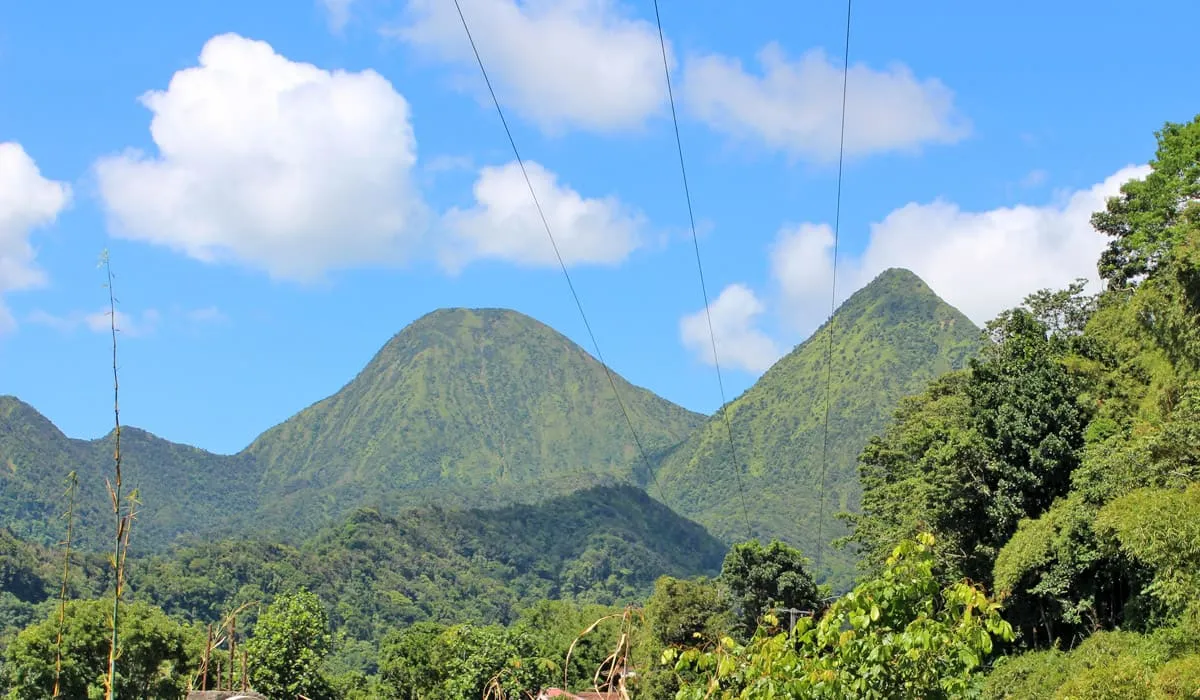
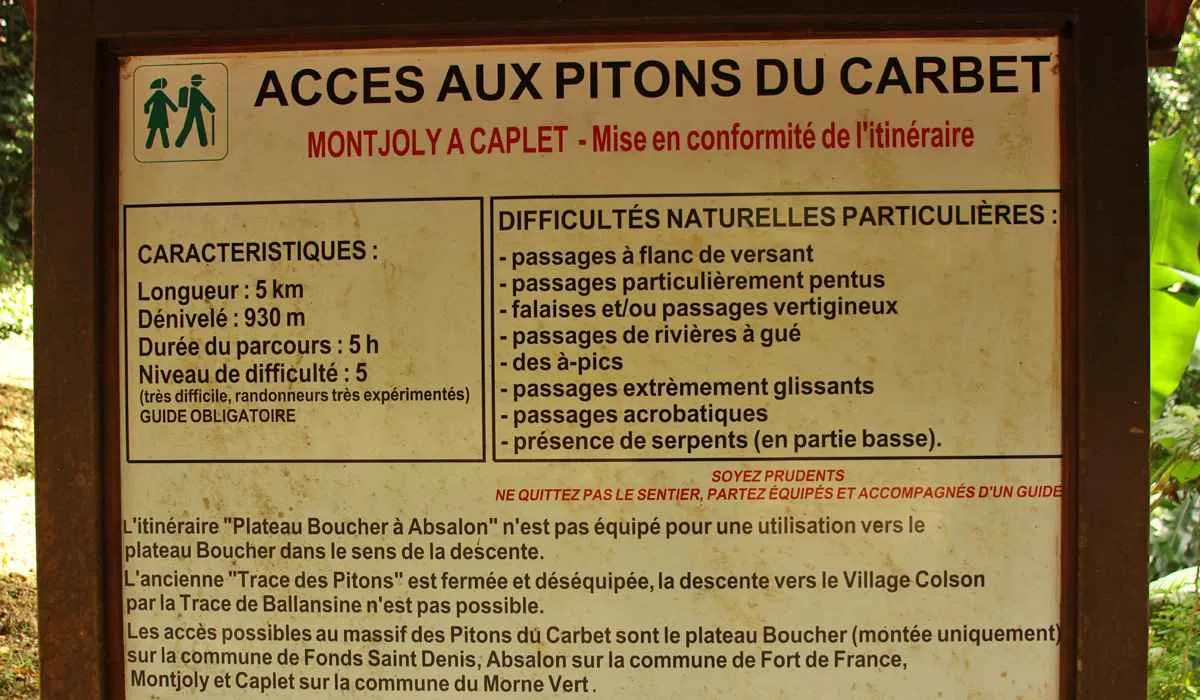
The Pitons du Carbet are located in the north of Martinique. The Pitons du Carbet are believed to be Martinique's oldest mountain range, dating back further than Mount Pelée, Martinique's highest peak. There are five mountain ranges grouped in a small area. They are of volcanic origin, and the highest of the five, Piton Lacroix, rises to 1,196m. Along with Mount Pelée, they are the island's most beautiful natural observatory. On September 30, 2023, the volcanoes and forests of Montagne Pelée and the Pitons of northern Martinique were admitted as a Unesco World Heritage Site.

This region is characterized by a thick tropical rainforest with tall tree ferns, anthuriums, heliconia, and bamboo. From an altitude of 800 meters (2,625 ft), the vegetation becomes less dense, revealing magnificent panoramic views over the island.

The five Pitons du Carbet are:

  • Piton Lacroix or Morne Pavillon (1,196 meters or 3,924 ft)
  • Piton de l'Alma (1,105 meters or 3,625 ft)
  • Piton Dumauzé (1,109 meters or 3,638 ft)
  • Piton Boucher (1,070 meters or 3,510 ft)
  • Morne Piquet (1,160 meters or 3,806 ft).

Trees reach heights of 30 to 40 m, and sometimes 50 m, and often have wide buttresses to consolidate their footing. Tree ferns in these forests can reach 15 m in height. After 1,000 m, the rainforest is replaced by thickets and savannahs. The hike up the pitons is very long.

So plan to get there very early in the morning (as early as 5 AM) if you want to complete the entire route. And don't forget food and water. There's nowhere to buy food in the area. For an unforgettable souvenir, bring your camera, as Morne Piquet offers a magnificent 180° panorama of Montagne Pelée and the Atlantic and Caribbean coasts.

Bring hiking boots and a raincoat, as it often rains. To get there, head for the North Caribbean. Between the towns of Le Carbet and Saint-Pierre, the signposts are easy to find.

Photo gallery
Pitons du Carbet
Pitons du Carbet
River at Les Pitons du Carbet
Pitons du Carbet
Pitons du Carbet
Pitons du Carbet
Pitons du Carbet

Mount Pelee

At 1,397 meters (4,583 feet) above sea level, Mount Pelee (Montagne Pelée in French) is Martinique's highest point. The volcano is still active and left an indelible scar when it erupted on May 8, 1902.

Its eruption is said to have killed over 32,000 people and destroyed the town of Saint-Pierre, then the capital of Martinique. The uniqueness of its eruption has even led to its name being used today to characterize a type of eruption (pelean eruption). Although many claim that Mount Pelée is located in Saint-Pierre, the volcano is actually in the commune of Morne-Rouge.

On September 30, 2023, the volcanoes and forests of Montagne Pelée and the Pitons in the north of Martinique were declared a UNESCO World Heritage Site.

If you're looking for a breath of fresh air, this is the place to be in Martinique. Indeed, at its summit, it would be around 10°C, the lowest temperature you'll find on the island. The further up the mountain you climb, the cooler it gets.

Its summit, known as "Le Chinois", rises to 1397 meters and is only visible for an average of seven days a year! So it's extremely rare that the clouds don't hide it, revealing its full contours.

Bring hiking boots and a raincoat, as it rains almost every day. On sunnier days, it can also be very hot, and the sun beats down more and more as you climb, so don't forget your cap or hat and plenty of water.

The climb up Mount Pelée takes around 5 hours, or even 6 hours if you plan to reach the summit. To get the most out of the site, plan to go very early in the morning (from 5 or 6 AM). You can choose to climb via the Aileron or the Grande Savane. Only the most experienced hikers/climbers can hope to reach the summit.

On the way back, you can stop off at the small restaurant bar in the parking lot to refuel before setting off again.

To get there, head north to Martinique, and once you've arrived in the commune of Morne-Rouge, head towards Ajoupa-Bouillon, taking the Route de l'Aileron to the parking lot of the 1st refuge (822 m). This first route leads to the 2nd refuge (1250 m) on the edge of the Caldeira. The signs will show you how to get there quite easily.

Photo gallery
Mount Pelee
Mount Pelee
Mount Pelee
Mount Pelee
Mount Pelee
Mount Pelee
Mount Pelee
Mount Pelee
Mount Pelee
Mount Pelee
Mount Pelee
Mount Pelee
Mount Pelee
Mount Pelee

The "saut gendarme"

The “Saut Gendarme” waterfall owes its name either to the fact that it was a popular spot for gendarmes riding up to Saint-Pierre to cool off and water their horses, or to the fall of a gendarme.

It was also the place where gendarmes hid in order to catch looters who came to plunder the town of Saint-Pierre, which was in ruins following the eruption of Mount Pelée.

This is a pleasant waterfall in a natural setting. The continuous waterfall, approximately 10 meters high, offers a refreshing dip to all hikers visiting the site.

A table and benches are available for those who wish to picnic. A walk to Mount Pelée is possible via the Trianon or Morne Calebasse road.

However, to hike there, it is strongly recommended that you be in good physical condition and well equipped. It is a very popular place with tourists and the local population.

To get there, it is advisable to follow the signs for Fonds-Saint-Denis. After driving along a steep road, signs will direct you to the “Saut gendarme” waterfall. There is a small parking lot where you can park your vehicle.

Photo gallery
“Saut Gendarme” waterfall
“Saut Gendarme” river
“Saut Gendarme” waterfall