
There were signs that magma was pushing its way to the surface, but in 1902, the reawakening of long-dormant volcanoes had not been studied, and warnings about Mount Pelée seemed to be nothing more than the fears of paranoids. In fact, this was the beginning of the phreatic phase, characterized by earthquakes, underground rumblings, and ash showers.
Today, if such warning signs were to appear in Pelée, researchers from around the world would rush to Martinique to study the volcano.
From the phreatic phase to the explosion of May 8, 1902
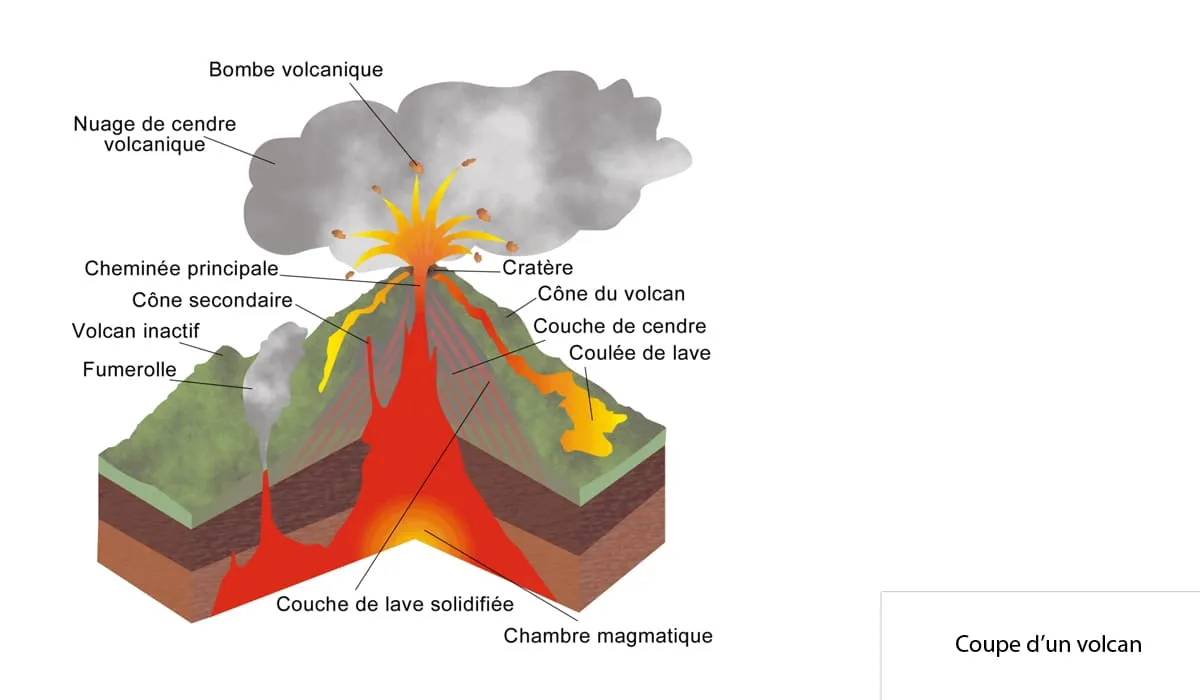
The phreatic phase defined on the previous page is what could be described in the case of Mount Pelée as a period of intense volcanic activity. Earthquakes, underground rumblings, and clouds of whitish smoke become more frequent.
Thus, on April 23 at 8:45 p.m., the inhabitants of Le Prêcheur heard an underground explosion that was also heard by the submarine cable operator off the coast. It was either an explosion or a small earthquake. In any case, this is where the second phase of the eruption began: hydrovolcanic activity where magma encountered water filtering through cracks. The vent was open. Columns of dust, ash, and steam shot up into the sky.
Over the next two days, thick cloud cover hid most of the events at the summit.
On April 24, the clouds cleared for a moment, revealing the summit, and several people north of the city noticed masses of whitish steam.
The newspaper Les Antilles reported on April 26 that “this abundant white steam seemed to come from a long crater that was probably located in the Rivière Blanche valley.” The explosions continued at intervals throughout the night, although no fragments reached the facilities on the coast. The clear sky on April 25 revealed the ridge once again and the white steam escaping from it.
At 7:00 a.m., a loud explosion was heard at Étang Sec. It was accompanied by huge splashes and noises and explosive crackling sounds, which were accompanied by underground rumblings, several shallow earthquakes, and the expulsion of considerable amounts of ash, steam, and boiling water mixed with rocks and tree trunks.
At 8:00 a.m. on Friday, April 25, the strongest explosion yet was heard, prompting the inhabitants of Saint-Pierre to stay informed. In Le Prêcheur, the noise was heard as a cannon shot. Dust smoke spread throughout the town, and the air was so hot and filled with dust that two people in the same area could not even recognize each other. Work was even interrupted on some plantations.
On Saturday, April 26, ash covered the town of Saint-Pierre and the surrounding communities. There was concern, but the population did not react. The next day, the dry lake filled with boiling water gushing from the cone. A strong smell of sulfur could be smelled in the streets of the capital and 6 miles around. Despite this, the polling stations opened their doors for the first round of legislative elections. Marius Hurard, editor-in-chief of the newspaper Les Colonies, saw no reason for panic in the capital and attempted to calm the population, declaring, “Saint-Pierre at the foot of Mount Pelée is no more dangerous than Naples at the foot of Vesuvius.”
On Wednesday, April 30, the villages of Le Prêcheur and Sainte-Philomène were covered in ash. In Le Prêcheur, the smell of rotten eggs became increasingly repulsive. Concern began to mount along with old women's tales of the 1851 eruption.
Duno-Emile wrote: “People were frightened. They took their children and their most precious possessions, rushing about as if they had been blinded. Then they returned home, shouting and praying at the same time, begging their neighbors to help them, but their neighbors, themselves so overcome with terror, remained deaf to all the cries of their fellow citizens.”
On Friday, May 2, at 11:30 a.m., the volcano entered what is known as the terminal phase, or magmatic phase, with earthquakes and violent explosions, the sun obscured, and numerous flashes of lightning lighting up the sky. A layer of ash several centimeters thick spread across the northern part of the island.
The next day, the trade winds blow a cloud of ash northward, temporarily clearing the sky over Saint-Pierre. Numerous earthquakes caused the telegraph cable to Dominica to break.

On Sunday, May 4, the ashfall returned and intensified. The ravines were flooded, and the roads to the north were cut off. The population was extremely concerned.
Many residents attempted to flee to seek refuge in cities further south. The city experienced a wave of departures. Calls were made for the city to be evacuated, but the proximity of the legislative by-elections scheduled for Sunday, May 11, which were difficult to postpone, did not encourage the elites to proceed with the evacuation or even to call on the population to leave the city under threat.
Prominent figures such as the mayor of Saint-Pierre, Roger Fouché, Governor Mouttet, the editor of the leading newspaper Les Colonies, Marius Hurard, and the wealthy industrialist Eugène Guérin downplayed the danger.
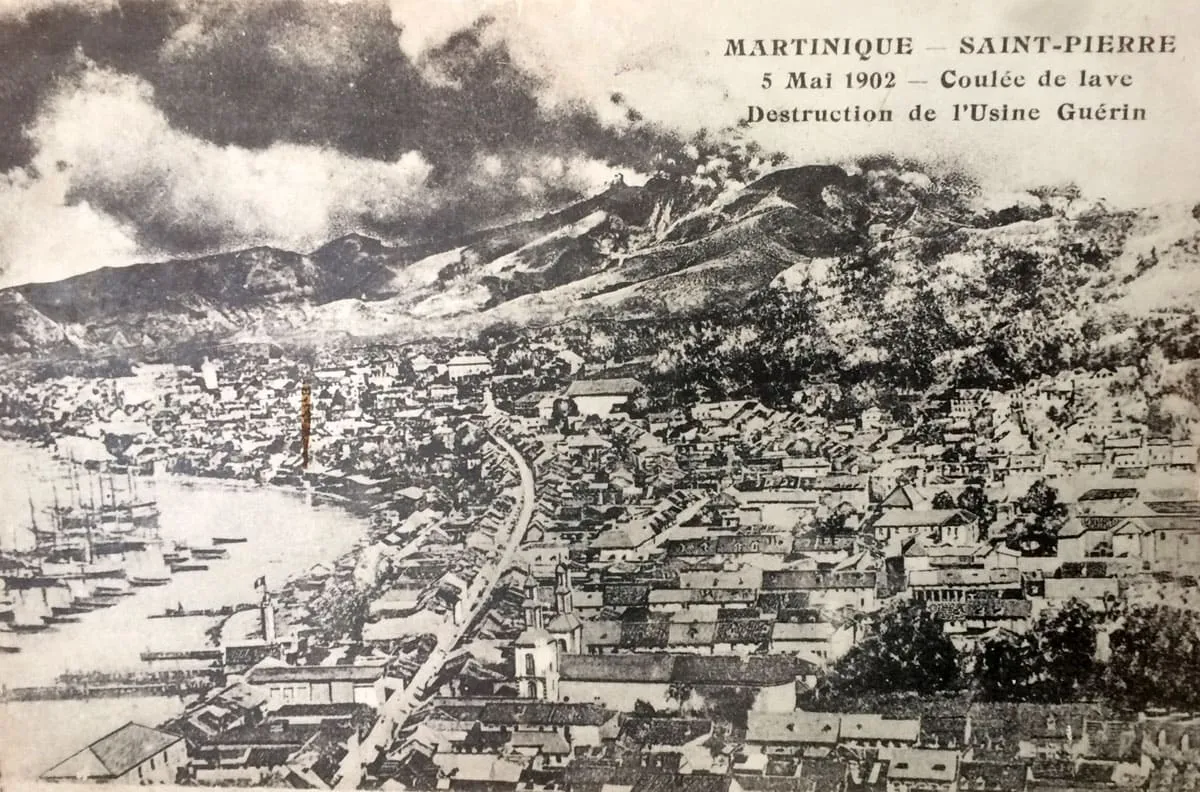
On the morning of Monday, May 5, the volcano appears calm. Myriads of ants (crazy ants), poisonous centipedes, and trigonocéphales snakes invade the streets of the city, killing around fifty people. The overflowing of the Étang Sec produced a lahar (volcanic mudflow) in the Rivière Blanche.
The Guérin factory was buried under more than 6 meters of burning mud, claiming 25 victims. The electrical grid, overloaded by wet ash, collapsed.
On Tuesday, May 6, the population continues to flee the city. Numerous announcements urge the population to desert the city under threat of an eruption. Explosions occur in the mountain, causing incandescent ash to escape.
Torrential rains caused by water vapor condensation and mudslides occur in all the ravines. The harbor of Saint-Pierre is covered with a thick layer of ash, pumice, and plant debris.
On Wednesday, May 7, the eve of the explosion on May 8, 1902, all was calm. Blocking the crater prevented the expulsion of gas and projectiles, setting the stage for the final explosion of the crater plug under the enormous pressure of the magma degassing.