

Organization of immigration and departure from India
Organization of the Indian Immigration
Indian immigration was regulated. There were two forms of immigration, one free, carried out on an individual basis by the planters, the other on a massive scale under government control. It is the second that prevails. The Ministry of the Navy and the Colonies signs treaties with shipowners and shipping companies providing for the regular transport of Indian contingents. The first, concluded on March 27, 1852, for six years with Captain Blanc, provided for the transport of 4000 Indians to the French colonies at the price of 500 Francs per migrant. From this contract, 1191 Indians were imported into Martinique. The future owner had to reimburse the trip and the 50 francs paid to the Indian employee before he departed for the colony.
On May 6, 1853, around 300 engaged arrived in Martinique in a boat that docked in the harbor of Saint Pierre. They hoped for a better life, while the planters and homeowners hoped for cheap labor capable of working many hours with maximum profitability.
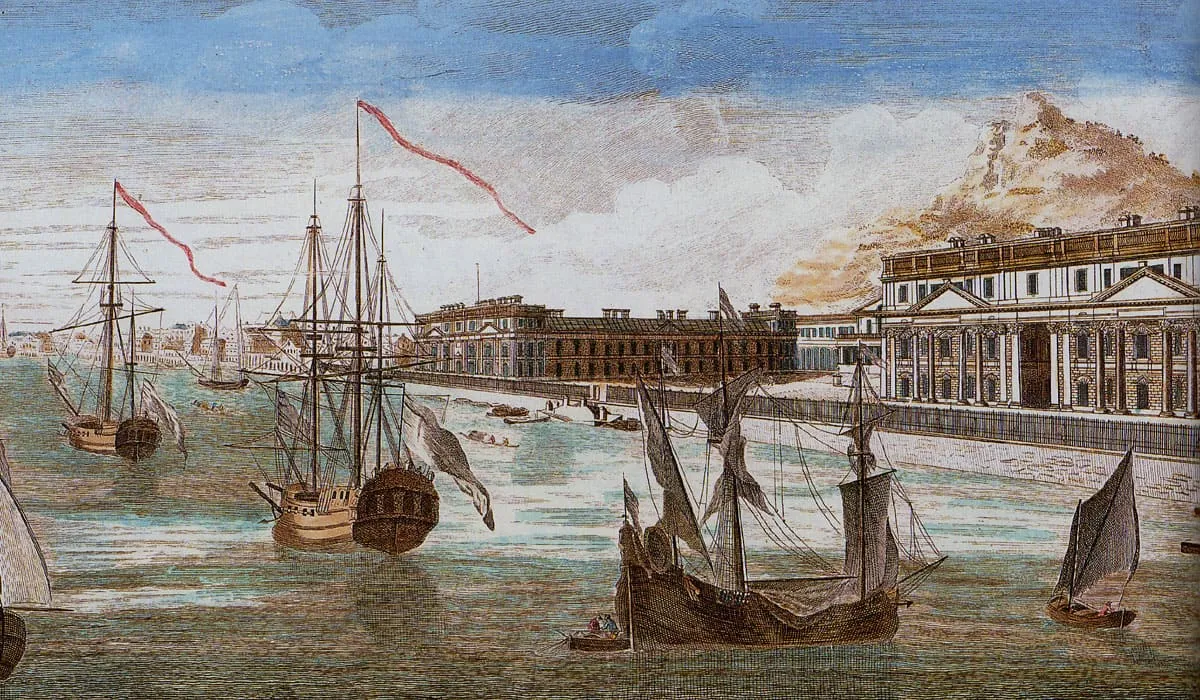
On April 25, 1855, the French Indian Immigration Society was created in Pondicherry to organize the recruitment and shipment of Indians to the French colonies. On July 1, 1861, a Franco-English convention was signed in order to recruit recruits in the north of India and to send them from the port of Calcutta. The ports of Pondicherry and Bombay were also the starting point for this immigration to the West Indies. The origins of Indians migrating to the French colonies were diverse. Until 1861, they came from the southern region of Madras, and it was the Tamils who were in the majority. Afterward, she was more of Calcutta and northwestern India.
The arrival of the Indians in Martinique was negotiated rather easily with the Anglo-Indian government because the famine raged in Madras and in the districts of the North of India. Being responsible for these hungry people, their departure reduced the expenses he had to make to feed this population.
The Journey from India to the West Indies
The Indians left their native land without knowing what to expect when they arrived on the island. Many believed that it was only a temporary assignment and that they would return to their homelands once their contract ended. Before their embarkation, a government agent looked to see if they had made their decision in good conscience and that no one had motivated this departure far from their land under duress. The boat was watched and checks were made to test its reliability on a trip that turned out to be long.
In fact, two months were needed to reach the Atlantic and the Caribbean islands. It was therefore necessary to ensure that there was enough food for the duration of the trip and that each person had sufficient space to support the crossing comfortably. Sanitary conditions were also primordial. Thus, two doctors were traveling on board (one French and one Indian) in order to intervene in the event of a medical problem.
Too many on the ships, the emigrants were often subject to all kinds of illnesses (influenza, dysentery, cholera, and other pulmonary diseases). Cholera, in particular, caused many victims who died even before arriving in the West Indies. The shipwrecks also claimed a significant number of victims. Thus, the “Souvenance”, chartered on December 28, 1870, by the French Government for transport between Pondicherry and Martinique, and which left India on March 15 of the following year, suffered a shipwreck in the Mozambique Channel, resulting in death. of the 371 occupants.
Life on ships was different from that of slave ships. Men were separated from women, the married couples with children from the married couples without children. Government agents took care of the good behavior of the relations and the organization of life on the boats. This did not, however, prevent the revolts of the immigrants, nor the abuses committed by the crew. After two months of sometimes tumultuous travel, they arrived in Martinique. The landing took place at Saint-Pierre and was then moved from 1857 to Fort de France where an "immigrant depot" was built for them on the right bank, at the mouth of the Levassor river. Once the administrative formalities have been completed, the workers are assigned to the enlisters who owed them accommodation, food and care.